
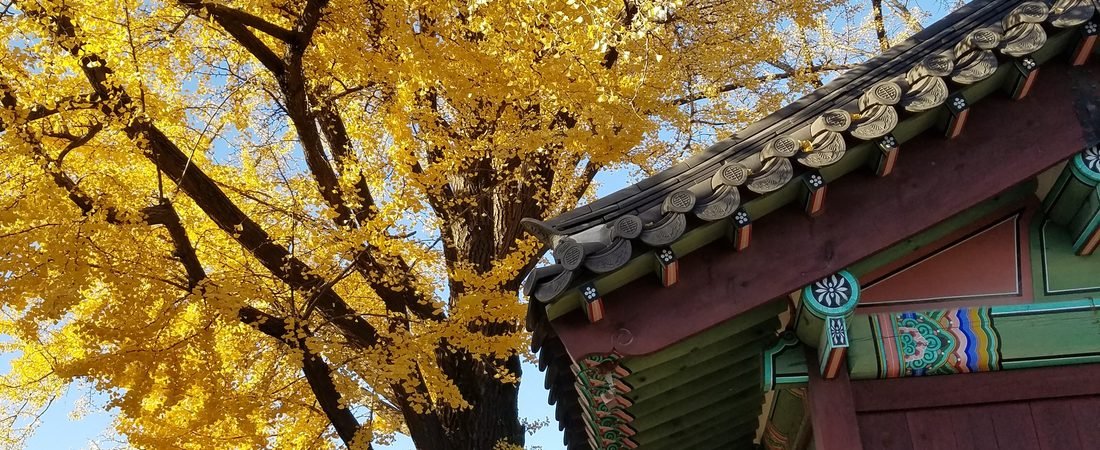
Fall brings plenty of reasons to spend time outdoors in Seoul: walks through palace grounds, afternoons in parks, visits to traditional markets, and evenings along the Hangang. As the season progresses, changing leaves add color to the city’s mountains, neighborhoods, and historic streets.
But a September trip can feel quite different from a November visit. Early fall can still be warm, while late fall calls for warmer layers and a little more thought about how long you’ll spend outside.
This guide covers Seoul in September, October, and November, including weather, what to wear, places to enjoy autumn scenery, seasonal food, and ideas for planning your days. Whether you’re hoping for fall foliage or simply looking forward to exploring in cooler weather, there’s plenty to enjoy beyond a single peak-leaf date.
In This Guide
🌡️ 1. Seoul Fall Weather: What to Expect
September, October, and November bring different versions of fall to Seoul. September can still feel warm, October generally brings cooler days for exploring, and November moves toward winter, especially in the mornings and after sunset.
The difference matters when planning a longer trip. On one visit from mid-October through mid-November, the weather stayed surprisingly warm for much of our stay. Then, during the final few days, it suddenly became very cold.
That experience is one reason I recommend packing layers, even when the forecast looks mild at the beginning of your trip. What feels comfortable on arrival may be quite different from what you need before flying home.
Check the forecast for your travel dates shortly before departure and again during your stay. Consider your plans, too: an afternoon walking in the sun can feel very different from an evening beside the Hangang or a morning on a mountain trail.
📅 2. Seoul in September, October, and November
Seoul in September
September is the transition from summer to fall. Early in the month, you may still want lighter clothing during the day, with an extra layer for cooler periods.
This is a good time to enjoy parks, neighborhood walks, and outdoor events without making autumn leaves the focus of your trip. Trees may still look quite green, especially early in the month.
Pack lighter clothes, a light layer, and rain protection. Leave room in your plans for an indoor stop when the afternoon feels warmer than expected.
Seoul in October
October is appealing if you enjoy spending much of the day outside. Cooler weather makes it easier to combine palace visits, markets, parks, and neighborhood walks.
As the month progresses, autumn color becomes more noticeable, although the timing varies between locations and years. Mountain slopes, city parks, and downtown streets won’t necessarily change together.
Bring layers and a jacket suited to the forecast. If you plan to stay out from morning until evening, carry something warmer rather than dressing only for the afternoon.
Seoul in November
November brings colder mornings and evenings, but the beginning of the month can still offer autumn scenery. Depending on the weather and location, you may find colorful leaves around parks, palace grounds, and city streets.
Later in the month, a day out might combine a shorter walk with a museum, café, market, or performance. You can still enjoy exploring—just give yourself places to warm up along the way.
Pack warmer outerwear and check whether you’ll need a scarf or gloves for your dates, especially if you’re planning early starts or evenings outdoors.
🧥 3. What to Pack for Seoul in Fall
Pack clothes you can combine as the temperature changes: lighter tops, a sweater or cardigan, and outerwear suited to your travel dates. For a longer trip, consider the forecast near the end of your stay as well as the beginning.
Comfortable walking shoes deserve space in your suitcase. A day in Seoul can involve subway stairs, sloping neighborhood streets, and long walks through palace grounds or parks. If you plan to hike, bring footwear appropriate for the trail.
A compact umbrella and a small day bag are useful, too. Leave enough room in your bag for a layer you take off during the afternoon and put back on after sunset.
For November visits, check whether warmer accessories would make your planned activities more comfortable. You may appreciate gloves and a scarf during an evening beside the river even if you barely use them while walking in the daytime.
🍁 4. When to See Fall Foliage in Seoul
Autumn leaves—danpung (단풍) in Korean—change at different times across Seoul. Mountain slopes, palace grounds, parks, and downtown streets each have their own progression, influenced by elevation, tree species, and the weather.
Late October into early November is generally a useful period to consider for autumn color, but there’s no single date when the whole city reaches its peak. A forecast for Bukhansan won’t necessarily describe what you’ll see beside a downtown palace wall.
As your trip approaches, check current foliage reports and recent photos from the places you want to visit. Look at when a photo was taken, since older autumn images often circulate again each year.
Keep some flexibility in your itinerary. If one location is still green or has already lost many of its leaves, another part of the city may offer a different scene. Choose walks and attractions you’ll enjoy even if the foliage is earlier or later than expected.
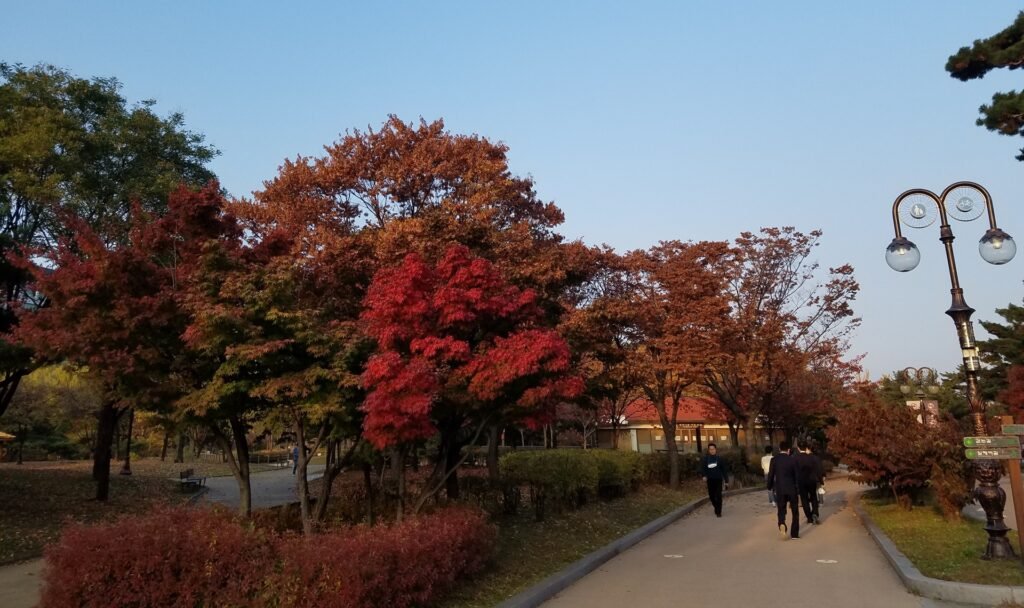
🍂 5. Where to Enjoy Fall Scenery in Seoul
You can fit autumn scenery into a day of sightseeing without dedicating the whole trip to finding leaves. Palace grounds, neighborhood streets, and city parks offer different ways to enjoy the season.
Seoul’s Palace Grounds
Gyeongbokgung (경복궁), Changdeokgung (창덕궁), Changgyeonggung (창경궁), and Deoksugung (덕수궁) combine traditional architecture with gardens and trees. In fall, give yourself time to wander through the grounds rather than rushing between the main buildings.
Choose a palace that fits the rest of your day. You’ll have more time to appreciate the setting if you visit one at a comfortable pace.
Free palace and royal-tomb admission
💡 Temporary free admission: From October 29 to November 15, 2026, general admission is free at Gyeongbokgung, Changdeokgung, Changgyeonggung, Deoksugung, Jongmyo Shrine (종묘), and Joseon royal tombs under the Royal Palaces and Tombs Center. Regular closure days still apply, and Changdeokgung’s Secret Garden special admission is excluded. Check separate arrangements for special programs.
Changgyeonggung evening visits: Regular evening admission is suspended November 10–15, 2026, from 5:30–9 p.m. Check the separate special-program arrangements if you want to visit at night.
🔎 Official free admission notice – Royal Palaces and Tombs Center (Korean)
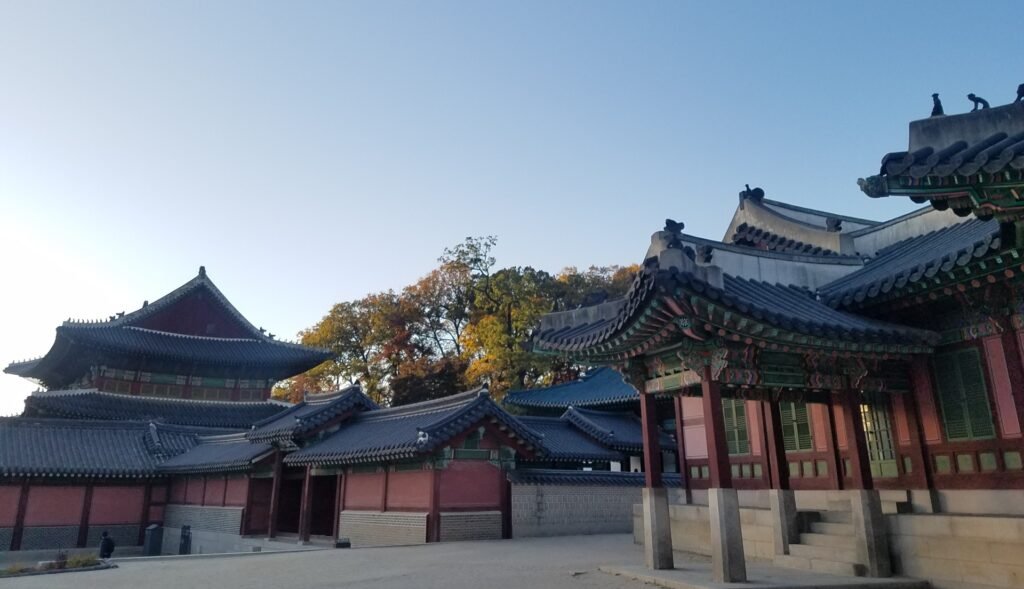
Deoksugung Stone Wall Road (덕수궁 돌담길)
The tree-lined road beside Deoksugung is an easy addition to a central Seoul itinerary. Combine a walk with the palace, the Seoul Museum of Art, or time exploring Jeongdong.
It’s a useful option when you want autumn atmosphere without planning a hike or a long park visit.
Jeongdong Observatory (정동전망대)
For a different perspective on Deoksugung, visit Jeongdong Observatory on the 13th floor of Seoul City Hall’s Seosomun Building. Its windows overlook the palace grounds, giving you a view of the traditional buildings and surrounding trees from above.
Admission is free. Use dedicated elevator No. 3, and check the current opening hours before visiting. Weekday and weekend schedules differ, so an evening visit won’t always be possible.
Seonggyungwan Myeongnyundang (성균관 명륜당)
The courtyard at Myeongnyundang, a historic lecture hall at Seonggyungwan near Sungkyunkwan University’s Seoul campus, combines Joseon-era architecture with a ginkgo tree believed to be more than 500 years old. The tree is designated a Natural Monument, adding historical interest to the autumn scenery.
Consider combining a visit with time exploring Hyehwa and Daehakro. Admission is free, and Visit Seoul lists opening hours of 9 a.m.–6 p.m. from March through October and 9 a.m.–5 p.m. from November through February. Check for access notices before making a special trip.
Seoul Forest (서울숲) and Seongsu (성수동)
Seoul Forest pairs naturally with nearby Seongsu. Spend part of the day among the park’s trees and open spaces, then head into the neighborhood for food, cafés, shops, or a pop-up that interests you.
This combination gives you flexibility: you can spend longer outdoors when the weather is pleasant or shift toward indoor stops when you need a break.
Namsan (남산)
Namsan brings together wooded paths and views over Seoul. You can make a walk part of the outing rather than focusing only on reaching N Seoul Tower.
Choose your route according to how much climbing you want to do, and bring a warmer layer if you plan to stay until evening.
Cheonggyecheon Stream (청계천)
Cheonggyecheon offers a waterside walk through central Seoul. Choose a stretch that fits your sightseeing plans, whether you’re exploring near Gwanghwamun, Jongno, or Dongdaemun.
It’s an easy place to slow down between stops. You can also return after dark for a different view of the stream and surrounding city.
🧭 Local side quest: Ride the Cheonggyecheon Self-Driving Bus
💡 An evening ride along Cheonggyecheon: The autonomous Cheonggye A01 (청계 A01) bus connects Cheonggye Plaza (청계광장), Sewoon Sangga (세운상가), and Gwangjang Market (광장시장).
Departures from Cheonggye Plaza run every 30 minutes from 7–11 p.m. on weekdays, with the final journey finishing around 11:50 p.m. There is no weekend or public-holiday service.
Rides are currently free, but bring a transportation card and tap when boarding and getting off. Each vehicle carries only eight passengers, so allow flexibility if it is full. Search 청계 A01 in Naver Map or KakaoMap for stops and live information.
Official Seoul City route, stops, and timetable
Yeouido (여의도)
Yeouido is another lovely place to enjoy Seoul’s autumn foliage. Combine a walk through Yeouido Park’s tree-lined paths with time beside the river at Yeouido Hangang Park.
The two parks offer different settings: leafy paths within the city and open views across the Hangang. On a pleasant day, you can enjoy both, with a meal or café stop between walks.
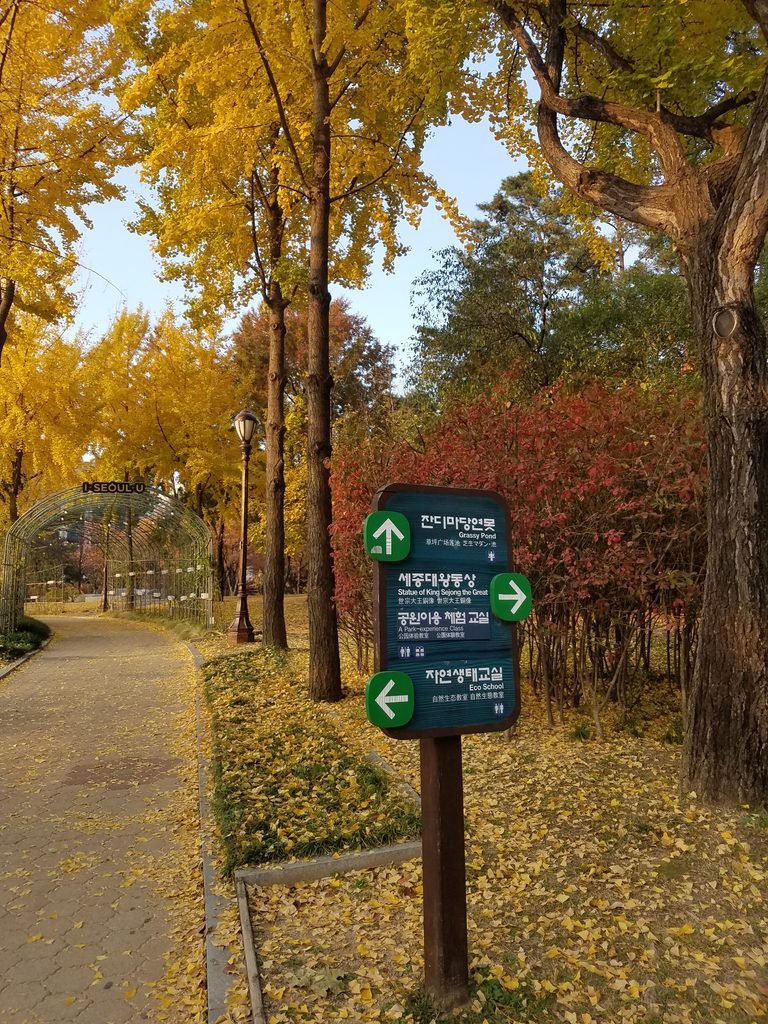
Olympic Park (올림픽 공원) and Seokchon Lake (석촌 호수)
Olympic Park is a good option when you want a longer walk through spacious grounds. Allow time to explore rather than treating it as a quick photo stop.
Seokchon Lake offers a different setting: a lakeside walk surrounded by the buildings and attractions of Jamsil. It pairs conveniently with nearby shopping or an indoor activity if the weather turns cold.
These are separate outings to choose between—or enjoy on different days—depending on your itinerary and how much walking you want to do.
Haneul Park (하늘 공원) and World Cup Park (월드컵 공원)
Autumn scenery here includes silver grass as well as changing leaves. The tall grasses and open hilltop landscape give Haneul Park a different feel from the wooded paths and palace gardens elsewhere in Seoul.
Allow time for the uphill approach, and check park access and closing times before planning an evening visit. A layer that blocks the wind can be useful in the exposed areas.
Bukhansan (북한산)
For a mountain outing, consider Bukhansan. Choose a trail that suits your fitness, footwear, and experience; routes vary considerably, and a summit climb requires more preparation than a city walk.
Check current trail conditions and the weather, start early enough to return before dark, and allow extra time on busy autumn weekends.
You can also enjoy Seoul’s fall scenery without hiking. Palace grounds, lakeside paths, and city parks offer plenty of alternatives.
🌰 6. What to Eat in Seoul in Fall
Markets, fruit shops, bakeries, and street stalls offer another way to experience the season. Look for autumn produce alongside warm snacks and meals that become especially appealing as the evenings cool.
Chestnuts and Sweet Potatoes
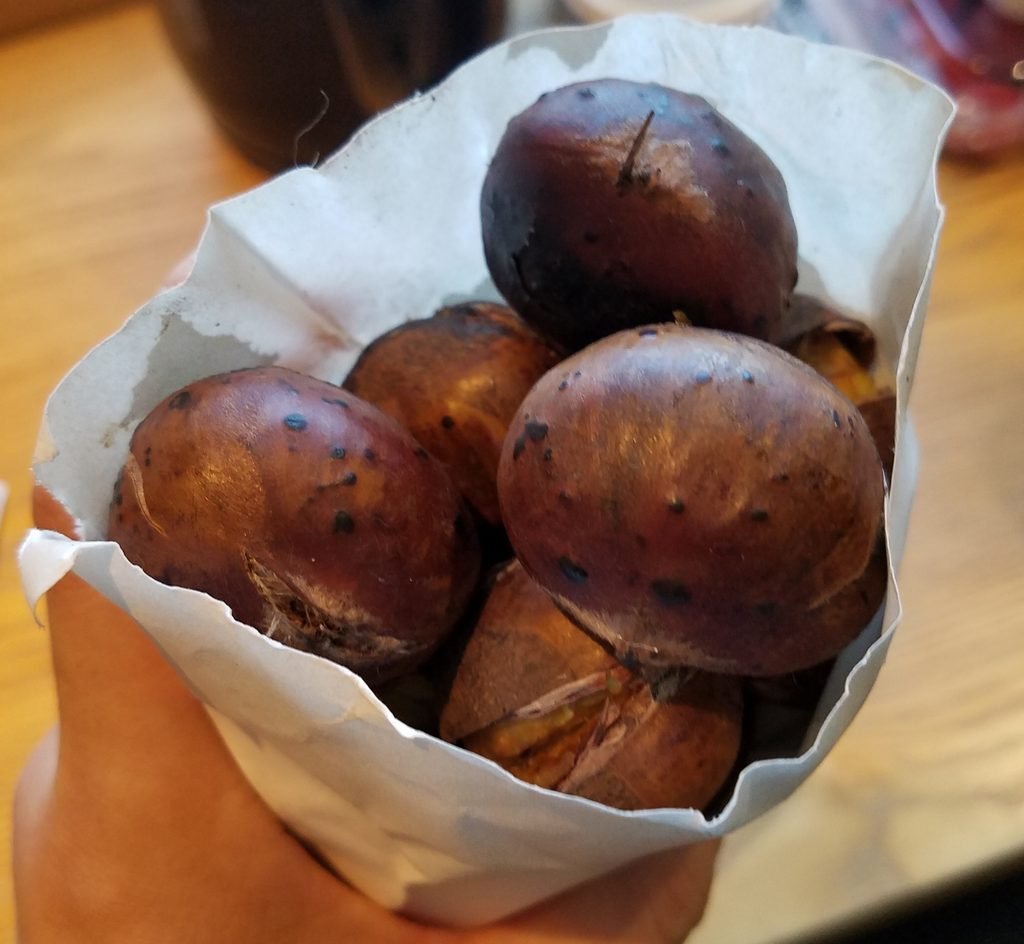
밤 (bam), chestnuts, and 고구마 (goguma), sweet potatoes, are foods to look for during the cooler months. You may find them sold fresh or used in breads, cakes, and other desserts.
As the weather gets colder, watch for 군밤 (gun-bam), roasted chestnuts, and 군고구마 (gun-goguma), roasted sweet potatoes. Availability varies by vendor and time of year, so treat them as something to enjoy when you come across them during your walks.
Persimmons, Apples, and Pears
Fruit displays can be part of the pleasure of visiting a market in fall. Look for 감 (gam), persimmons, 사과 (sagwa), apples, and 배 (bae), Korean pears.
Persimmons come in different forms. 단감 (dan-gam) are firm, sweet persimmons, while 홍시 (hong-si) are soft and ripe. 곶감 (got-gam) are dried persimmons, which you may also encounter in shops and gift displays.
Some fruit sold in Korea—especially pears and apples—may be much larger than you’re used to seeing at home. Size alone doesn’t mean a fruit is genetically modified. Fruit size depends on the variety and how it’s grown, and traditional breeding for traits such as size and sweetness is different from genetic engineering.
Songpyeon Around Chuseok
송편 (song-pyeon) are rice cakes associated with Chuseok, often shaped like half-moons and filled with ingredients such as sesame, beans, or chestnuts.
If your visit overlaps the holiday period, look for them at rice-cake shops and markets. They offer a seasonal connection to Chuseok even if you aren’t taking part in a holiday celebration.
Warm Snacks and Meals
As evenings become colder, a stop for 호떡 (hotteok) or a warm meal can be a welcome part of the day.
For a shared meal, consider 전골 (jeon-gol), a Korean dish cooked in a pot at the table. Ingredients and broth vary by restaurant, so check the menu for the version you’d like to try.
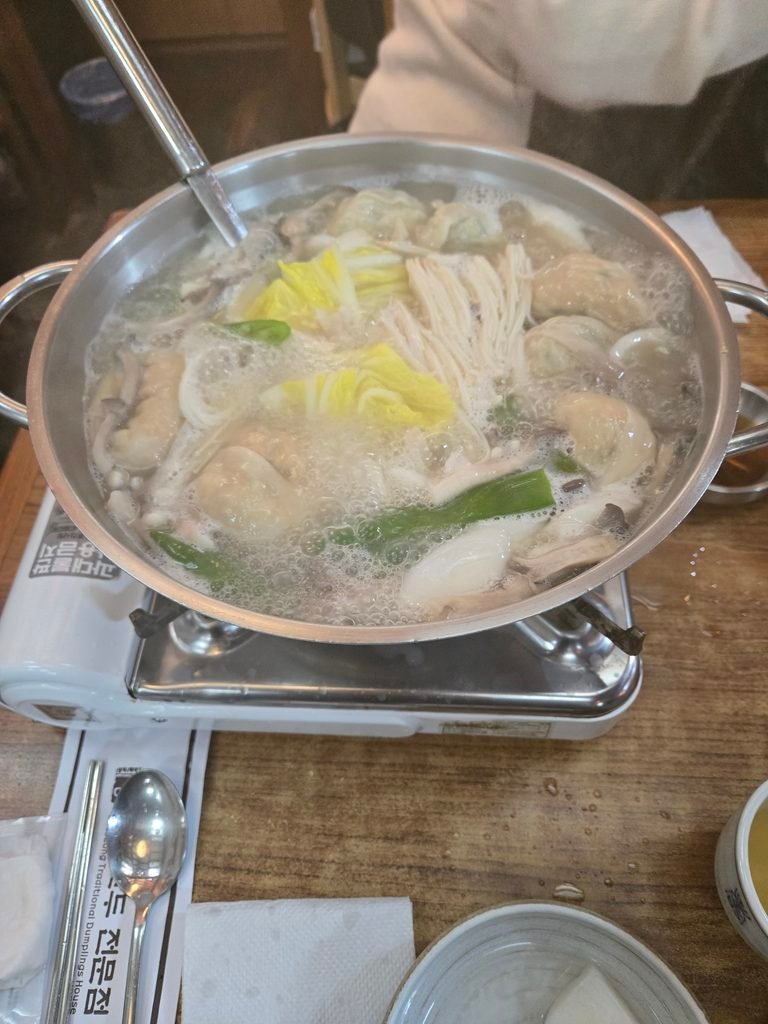
Markets are useful places to browse, but seasonal eating can be as simple as picking up fruit, trying a chestnut pastry, or stopping for something warm between walks.
🚶 7. Markets, Neighborhood Walks, and Indoor Stops
Fall is a good time to combine a market visit with exploring the surrounding neighborhood. You can browse food stalls and shops, stop for a meal, and continue walking when the weather is comfortable.
Namdaemun, Gwangjang, and Mangwon markets offer different settings for an outing. Choose one that fits your route and interests, and leave time to explore beyond the stalls rather than trying to visit several markets in one day.
Seochon and the streets around Jongno and Insadong also lend themselves to a day of walking, eating, and browsing. A café, small shop, or gallery can become part of the outing whenever you feel like stopping.
Keep a few indoor options nearby for rainy afternoons or colder days. Museums, exhibitions, shopping centers, and performances can give your day variety while providing a break from the weather.
You can also leave room for discoveries. A seasonal bakery display, an unfamiliar side street, or a shop you hadn’t planned to visit may be a good reason to slow down.
Seoul Autumn Festa Information Center
If you’re exploring Daehakro, the Seoul Autumn Festa Information Center can help you discover performances taking place across the city.
It operates at the Seoul Foundation for Arts and Culture’s Daehakro Center through November 29, 2026, excluding Mondays and public holidays. The address is 122 Dongsung-gil, Jongno-gu (서울 종로구 동숭길 122).
Check individual performances for dates, ticket requirements, and language accessibility rather than treating the overall festival season as a daily performance schedule.
🌙 8. Enjoying Seoul After Dark in Fall
An evening walk gives you another view of the places you explored during the day. Along Cheonggyecheon, illuminated buildings frame the stream, while Namsan offers views across the city. Beside the Hangang, you can watch the skyline light up as the daylight fades.
Choose an evening outing near where you’re already spending the day. After exploring Jongno, you might walk along Cheonggyecheon. A visit to Yeouido could end beside the river, followed by dinner nearby.
Bring a warmer layer if you’ll be sitting outdoors or spending time by the water. As November gets colder, a shorter walk followed by a meal, café visit, or performance can make a comfortable evening.
Some of Seoul’s palaces offer evening visits in fall, giving you a chance to see their buildings and grounds illuminated after dark. Depending on the palace, these may be regular evening hours or special programs on selected dates.
Check the palace’s official schedule and admission instructions before going, since special programs may require advance reservations.
👥 9. Planning Around Fall Crowds and Holidays
Pleasant autumn weekends draw people to parks, mountain trails, and popular foliage spots. If your schedule allows, try a weekday morning for places where you’d prefer a quieter walk.
Festivals can also change how you get around. Before attending a large event, check its transportation notices and return options. Allow extra time, especially when crowds leave together after an evening program.
If Your Trip Overlaps Chuseok (추석)
Chuseok is one of Korea’s major holidays, and many people travel to spend time with family. Intercity train and bus tickets can be harder to secure, so check reservation arrangements early if you plan to travel beyond Seoul.
Within the city, opening hours vary. Some independent restaurants and shops close for part of the holiday, while attractions may remain open or offer special cultural programs. Check the places that matter to your itinerary individually.
Leave Some Room in Your Schedule
Reserve accommodation and any ticketed experiences you particularly want to attend, then leave flexibility around outdoor plans.
A park walk can move to a sunnier afternoon, and a museum or exhibition can fill a rainy one. Having a few options in the same area makes those changes easier without spending the day traveling across Seoul.
🚆 10. Fall Day Trips from Seoul
If you have a spare day, a trip beyond Seoul can add a different setting to your autumn visit. Choose somewhere you’d enjoy exploring even if the leaves haven’t reached their peak.
Suwon (수원): Fortress Walls and Historic Streets
Suwon is a good choice if you enjoy history and walking. Build your day around Hwaseong Fortress, with time for nearby streets, a meal, and a café stop.
Choose a manageable stretch of the fortress walls rather than feeling you need to walk the entire route. The combination of architecture, city views, and autumn scenery gives you plenty to enjoy at a comfortable pace.
Nami Island (남이섬): Tree-Lined Walks
Nami Island is an option for travelers who want a day centered on scenery and walking. Its tree-lined paths are especially appealing as the leaves change.
Allow time for the journey to the ferry dock and the crossing, as well as the island itself. Popular autumn weekends can be busy, so leave some breathing room in your schedule.
The Garden of Morning Calm (아침고요수목원): A Garden Outing
The Garden of Morning Calm in Gapyeong offers landscaped gardens against a mountain backdrop. It’s another option if you’d like to spend part of your trip among plants and seasonal scenery.
Nami Island and the garden appear together on many itineraries, but traveling between them takes time. Check the connections before combining both, particularly if you’re using public transportation.
Choosing Your Day Trip
Check the full journey from your accommodation, including local buses, taxis, or ferry connections after the train ride. Confirm your return options before setting out.
One destination explored comfortably can make a more satisfying day than several stops squeezed between transfers. For places farther afield, consider whether an overnight stay would give you more time to enjoy the area.
🎉 11. Seoul Fall Events and Evening Visits — 2026
Seasonal events can add something special to a day of sightseeing. The options below include late-October and November activities, alongside palace visits you can enjoy after dark.
For more November outings in Seoul and elsewhere in Korea, see my guide to Korea’s November 2026 festivals and events.
Namsan Night Festival — Selected Dates, October 23–November 14
The Namsan Night Festival brings evening activities to Namsan, including picnic-style programs, foliage walks, and a silent DJ event.
Programs run on selected dates within the festival period, with different schedules and reservation arrangements. Check the individual activity before planning your visit; the overall date range doesn’t mean every program operates each evening.
Explore the official English festival website.
🗓️ 12. A Flexible 3-Day Fall Itinerary
These three days combine autumn walks with food, neighborhoods, and indoor stops. Rearrange them around the weather, attraction closing days, and any events you’ve booked.
Day 1: A Palace, Seochon, and Cheonggyecheon
Start with Gyeongbokgung, allowing time to explore the grounds. Head into nearby Seochon for lunch, then spend the afternoon browsing its streets, shops, and cafés.
If you still feel like walking, continue toward Gwanghwamun and enjoy a stretch of Cheonggyecheon. You can finish with dinner around Jongno rather than squeezing another major attraction into the day.
Day 2: Seoul Forest and Seongsu
Spend the morning walking through Seoul Forest, then head into Seongsu for lunch.
Leave the afternoon for cafés, shops, or a current pop-up that interests you. Check reservation requirements for any specific experience you want to visit, while leaving room to browse along the way.
Stay for dinner or make an early evening of it if you have a longer outing planned the next day.
Day 3: Choose Your Kind of Autumn Outing
For another day in the city, combine Deoksugung and its Stone Wall Road with a museum or gallery stop in the Jeongdong area. If you’d prefer to visit the palace after dark, explore the surrounding area first.
For more time in nature, choose a Bukhansan trail suited to your experience and make that the main activity of the day.
Alternatively, use the day for Suwon, Nami Island, or the Garden of Morning Calm. Pick one outing that fits your interests and transport plans, with enough time to enjoy it before returning to Seoul.
If Seongsu is on your itinerary, my guide to Seongsu pop-ups in November 2026 covers temporary events to explore while you’re in the neighborhood.
Before You Go
Choose a few autumn outings you’re especially looking forward to, then leave room for the weather and whatever catches your attention along the way.
A palace visit, a walk beneath changing leaves, and something warm to eat can make a satisfying day without a packed schedule. Bring layers, check the details for any special events, and give yourself time to enjoy the neighborhoods between your planned stops.
Official Resources
- Seoul Metropolitan Government — Seoul’s seasons and climate
- VISITKOREA — autumn scenery destinations
- Deoksugung — opening hours and visitor information
- Changgyeonggung — opening hours and visitor information
- Jeongdong Observatory — official visitor information
- Myeongnyundang — official visitor information
- Seoul Autumn Festa Information
- Seoul International Garden Show — autumn edition information
- Namsan Night Festival — official English website