
Whether this is your first trip to Korea or your fifth, there are always a few practical details worth checking before you go.
Transportation options, apps, payment methods, and entry requirements can change between visits. Even small details—like which map app to open, how to pay at a market stall, or how to connect to public Wi-Fi—can make your trip easier.
These Korea travel tips cover the practical things I would want to know before arriving, including entry requirements, mobile data, payments, transportation, shopping, restaurants, weather, and everyday situations you may encounter along the way.
In This Guide
🛂 1. Check Korea’s Entry Requirements Before You Fly
Check the current entry requirements for your nationality and immigration status, even if you’ve visited Korea before.
Korea’s temporary K-ETA exemption for eligible countries and regions currently runs through December 31, 2026. Check whether your passport qualifies on the official K-ETA website.
Korea also operates the e-Arrival Card system. Submission is free, and the submission window includes your arrival date and the two preceding days. For example, if you arrive on October 30, you can submit it on October 28, 29, or 30 before entry inspection.
Some travelers, including those with a valid K-ETA, are exempt from submitting an arrival card. Check the requirements for your own status on the official e-Arrival Card website.
⚠️ Important: The e-Arrival Card is free. Apply through the official government website to avoid paying a third-party service.
📶 2. Plan How You’ll Stay Connected
Korea has plenty of free Wi-Fi at airports, public facilities, cafés, shopping centers, and other locations. Seoul also provides public Wi-Fi on many streets and at parks, markets, bus stops, and other public spaces.
Connecting may take an extra step. Some networks require you to open a connection page, enter login details, or have access through a particular provider.
For Seoul’s SEOUL_Secure public network, the ID and password are both seoul. Other networks may have different access requirements.
An eSIM, physical SIM, or pocket Wi-Fi gives you a connection while moving between places—useful for checking directions, translating something, looking up transportation, or calling a taxi. Free Wi-Fi can supplement your own connection throughout the trip.
📱 3. Get Your Phone Ready Before You Arrive
A little setup at home can make your arrival easier.
Check whether your phone is unlocked and supports the SIM or eSIM you plan to use. Download the apps you expect to need, sign into them, and complete any registration or payment setup available before leaving home.
Save your accommodation’s name and Korean-language address somewhere you can access without internet. A screenshot is useful if your connection isn’t working when you first arrive.
For a walkthrough of what to do after landing, see my Incheon Airport arrival guide.
🗺️ 4. Get Familiar with a Korean Map App
If you normally use Google Maps when traveling, install Naver Map or KakaoMap before coming to Korea as well.
These apps can help you find walking routes, public transportation connections, business locations, and entrances. Search for your accommodation and a few places on your itinerary before leaving home to get familiar with the app.
If an English search doesn’t find the right place, try copying its Korean name or address into the search box.
📱 5. Download the Apps You’ll Actually Use
Start with the basics: navigation, translation, public transportation, and taxis. Depending on your itinerary, you may also want apps for train tickets, restaurant waiting lists, or attraction reservations.
Choose apps with features you expect to use. Trying them at home gives you time to work through unfamiliar menus or registration steps before you need them during your trip.
🚇 6. Choose a Transportation Card That Fits Your Trip
Choosing a transportation card ahead of time gives you one less thing to figure out at a subway station with your luggage.
You’ll encounter T-money alongside other cards and passes designed for particular destinations or travel patterns. The best option for you depends on where you’re going and how often you’ll use public transportation.
Before choosing, check where the card works, where you can buy it, and how you’ll add money or get a refund. Purchase and top-up methods vary, so follow the current instructions for the card you plan to use.
💳 7. Why Choose KRW When Paying by Card?
When paying with a foreign card in Korea, a payment terminal may ask whether you want to pay in Korean won (KRW) or your home currency.
Choosing your home currency can activate Dynamic Currency Conversion (DCC). The merchant or payment processor converts the purchase using its offered exchange rate, which may include a markup.
I generally choose KRW so my card network handles the conversion. Before approving the payment, check the selected currency and any conversion charges—even when an employee operates the terminal.
A foreign transaction fee is separate from DCC. If your card charges one, it may still apply to an overseas purchase regardless of which currency you select.
When an Employee Processes Your Payment
At some stores, an employee takes your card and processes the transaction. Say “Korean won, please” before they complete the payment, then check your receipt to confirm which currency was used.
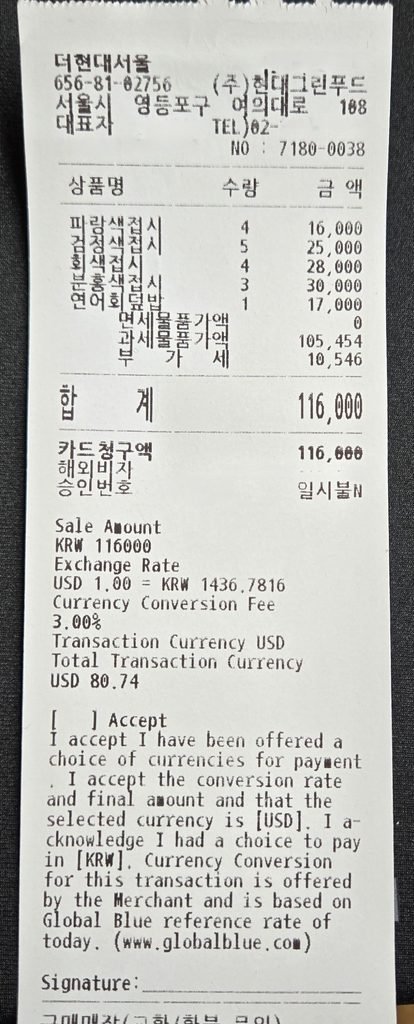
My receipt from The Hyundai Seoul shows a ₩116,000 purchase converted to US$80.74, including a disclosed 3% currency-conversion fee. That fee was included in the conversion rather than added as a separate charge afterward.
My Shinsegae receipt offered an exchange rate with a 3% markup, but confirms that I declined USD and paid in KRW. These examples show why checking the selected currency matters. The 3% shown on these receipts isn’t a universal DCC rate.
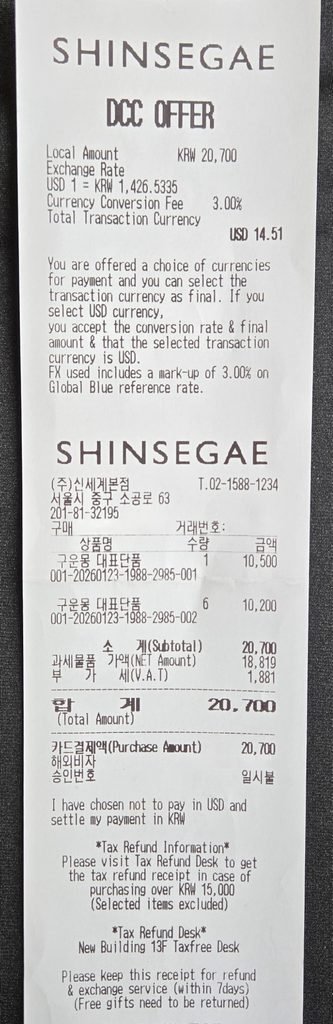
Left — Shinsegae: DCC declined; payment made in KRW.
Right — The Hyundai Seoul: Payment processed in USD with a disclosed 3% conversion fee.
💵 8. Korea Is Card-Friendly, but Keep Some Cash
I use a foreign Mastercard with no foreign transaction fee for most purchases in Korea and generally have no problem paying by card. But I still carry some Korean won.
I’ve had that same card unexpectedly declined at both a major department store and smaller independent shops, even though it worked normally elsewhere. Cash meant I could complete the purchase.
Even at stores that accept credit cards, a foreign-issued card may occasionally be declined. A modest cash backup is useful for those moments, as well as for markets, small stalls, and certain machines.
Bank Transfer Signs at Market Stalls
At markets and small vendors, you may see a Korean bank name and account number displayed for 계좌이체 (gyejwa iche), or direct bank transfer.
This payment method generally requires a Korean bank account or access to a service that supports Korean domestic transfers. If you’re visiting with only an overseas bank account, plan to use cash or an accepted card instead.
Self-Service Cash Boxes
Some vendors have a cash box or tray where customers put their money instead of handing it directly to the seller.
The vendor may tell you how much change to take, or you may be expected to take the correct change yourself. If you’re unsure how it works, ask before taking any change.
For more on checking prices, understanding bills, and handling unexpected charges, see my guide to avoiding overpaying in Korea.
🏧 9. Look for an ATM That Accepts Foreign Cards
You’ll find ATMs at banks, airports, shopping areas, transportation hubs, and some convenience stores. Foreign-card acceptance varies between machines.
Look for one marked Global ATM or Foreign Card, and check for your card network’s logo. Review any fees and currency-conversion options before confirming the withdrawal.
If one ATM rejects your card, try another bank or operator. A failed attempt doesn’t necessarily mean there’s a problem with your card.
₩ 10. Check the Exchange Rate for Your Specific Bills
Independent exchange shops may offer different rates depending on the denomination of your bills. The rate advertised outside may not apply to the cash you’re exchanging.
On one trip, I wanted to exchange only US$40. Some independent exchange counters were hesitant or wouldn’t accept the smaller bills. Others would exchange them but offered a lower rate than the headline rate on their sign.
An airport exchange counter or bank may be another option, although rates and accepted currencies or denominations can differ.
Before handing over your cash, ask what rate applies to your particular bills and how much Korean won you’ll receive.
🛍️ 11. Keep Your Tax-Refund Receipts
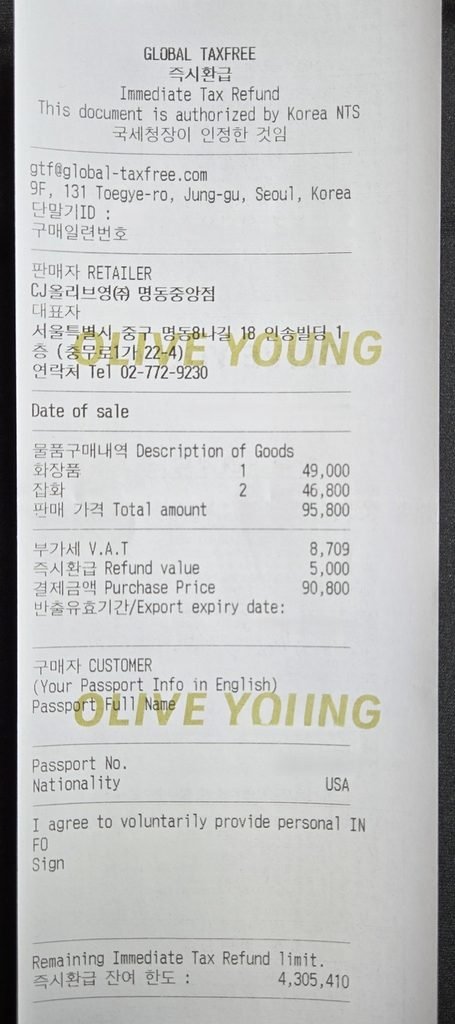
If you’re eligible for Korea’s tourist tax-refund program, purchases of ₩15,000 or more at participating stores may qualify. Ask for a tax-refund receipt when shopping. This may be printed separately from your regular sales receipt, so keep both together.
Some stores deduct the tax immediately after checking your eligibility and passport. Others issue documents so you can claim the refund later.
Korea has several tax-refund operators, and downtown counters or kiosks may only handle receipts from their own operator. Check the operator named on your receipt when choosing where to claim your refund. Department stores may also have their own refund facilities.
Allow extra time for the refund process, and keep your passport, receipts, and purchases accessible until any required customs inspection is complete.
Before sending purchases away in checked luggage, follow the airport’s tax-refund instructions. Scan your passport and tax-refund receipts at a kiosk as directed. If customs requests an inspection, you’ll need to show the purchases.
If they’re in a bag you plan to check, let airline staff know before the bag is sent onward. Some procedures require visiting the airline counter first, so follow the instructions for your airport and terminal.
On my trip, I scanned my receipts at the kiosk first. No inspection was requested, so I checked my luggage, went through security and departure immigration, and collected my refund inside the departure area.
The order I followed:
Tax-refund kiosk → Customs inspection, if requested → Check luggage → Security & departure immigration → Collect refund in the departure area
🛍️ 12. Check the Currency on International Booking Sites Too
When buying tickets, transportation, or shopping vouchers through an international booking site, check the final price and the currency you’ll be charged in.
I once bought a ₩150,000 Olive Young voucher through Klook because the price worked well for me. Whether a voucher offers good value depends on its price, restrictions, and how you plan to use it.
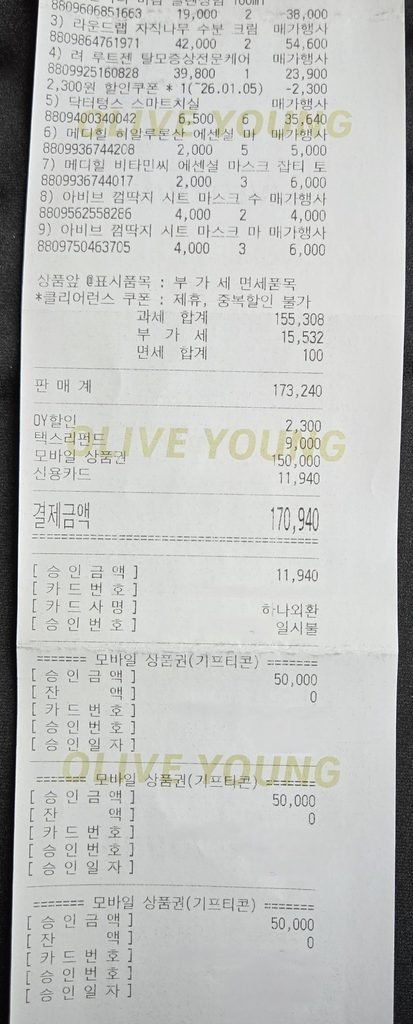
Compare the amount you’ll pay with the value you’ll receive. Use the final checkout total, including any fees your card may charge, when comparing costs.
🚕 13. Taxis Are Easier When You Use an App
You can hail an available taxi on the street, but an app can make the process easier when you don’t speak Korean.
Entering your destination before getting into the taxi helps avoid misunderstandings about where you want to go. Keep your destination’s Korean name and address handy as well.
Set up your taxi app while you have time to work through registration and payment settings. Before booking, check whether you’ll pay through the app or directly to the driver. It’s easier to sort this out at your accommodation than when you’re tired or standing in the rain.
🍜 14. Restaurants May Work Differently From What You’re Used To
There isn’t one way to order at a Korean restaurant. You might order from a server, at a counter, through a kiosk, or on a tablet at your table. Some popular restaurants use a waiting list instead of taking reservations.
Watch what other customers are doing, use your translation app when needed, and ask for help if you’re unsure.
Plan Around Lunch Crowds and Afternoon Breaks
In office districts, restaurants can fill quickly around noon as nearby workers head out for lunch. Eating a little earlier or later can help you avoid the busiest period.
Some restaurants also close between lunch and dinner, often around 3–5 p.m. Check the restaurant’s break time and last lunch order before heading over, especially if you’re planning a late lunch.
If you have food allergies or dietary restrictions, prepare before your trip. A dish’s name or English menu description may not list every ingredient. Save a clear explanation of your dietary needs in Korean somewhere you can easily show restaurant staff.
🗣️ 15. You Don’t Need to Speak Korean to Visit
You can travel around Korea without speaking Korean, particularly in major tourist areas. English availability varies, though, and a translation app is useful when you and the person you’re speaking with don’t share a language.
It can help with menus, signs, and short conversations. Learning a few everyday Korean expressions can also make interactions easier.
💡 Tip: If you use Papago, turn on its honorifics option when translating into Korean. This helps you use 존댓말 (polite speech) with staff or people you don’t know. Koreans will generally be understanding if a foreign visitor uses 반말 (casual/informal speech) by mistake, but choosing polite speech shows consideration.
🚰 16. Yes, You Can Drink Seoul’s Tap Water
Seoul’s tap water, called Arisu (아리수), is treated for drinking and regularly tested. However, a building’s pipes or water tanks can affect the water coming from its taps.
If the water at your accommodation looks, smells, or tastes unusual, ask the property before drinking it.
Take a Second Look at Unfamiliar Drinks
Many bottled-water brands in Korea use label-free packaging, so you may see clear bottles with very little printed information.
Some clear alcoholic drinks can also look like water at a glance, including liquor sold for making 담금주 (damgeumju)—alcohol infused with fruit, herbs, or other ingredients.
If you’re unsure what’s in a bottle, use camera translation to check the product information and look for an alcohol percentage, or ask before drinking it.
🗑️ 17. Public Trash Cans Can Be Hard to Find
Public trash cans can be surprisingly hard to find, even in busy neighborhoods. If you buy a snack or drink to enjoy while walking, you may need to carry the packaging for a while.
Keep a small bag with you for wrappers, tissues, receipts, and other small pieces of trash until you find an appropriate bin. Check the labels before using it, as some bins are for specific recyclables.
Bags on the Street Aren’t Public Trash Bins
You may see bags of household or business waste outside buildings, waiting for collection. Leave those bags and piles for collection and carry your own trash to a suitable bin.
🕐 18. Check Business Hours and Holiday Hours
Opening hours during Korean public holidays vary by business. Some places close, others shorten their hours, and some operate as usual.
Around Seollal (Lunar New Year) and Chuseok, check the schedules of the restaurants, markets, and attractions you plan to visit. These holidays follow the lunar calendar, so their dates change each year. Check the surrounding holiday period too, especially when planning travel between cities.
What Does “Open Year-Round” Mean?
You may see 연중무휴 (open year-round), meaning no regular closing day. Special holiday closures or changes to opening hours may still apply, so look for additional notices.
For any visit, check regular closing days, break times, last orders, and last admission as well as the closing time. A place may stop accepting customers well before it closes.
🔌 19. Check Your Chargers Before Packing
South Korea uses 220V electricity at 60Hz, with outlets that have two round holes. Depending on where you’re traveling from, you may need a plug adapter.
A plug adapter changes the plug’s shape; it doesn’t convert voltage. Check the input label on each device or charger before packing.
Many phone, tablet, and laptop chargers are labeled 100–240V, 50/60Hz, which means they support Korea’s electricity supply. You may still need a compatible plug adapter.
Check appliances individually, especially hair dryers and other heating appliances, as their voltage requirements may differ.
☔ 20. Check the Weather Close to Your Trip
Korea’s seasons can affect how you pack and plan your days. Summer brings heat, humidity, and periods of heavy rain, while winter can be very cold. Spring and fall can feel quite different at the beginning and end of the season.
Monthly weather averages are a useful starting point when planning. Shortly before departure, check the forecast for the places you’ll visit and adjust what you pack.
Consider early mornings, evenings, and outdoor activities as well as the daytime high.
If you’re planning an autumn visit to the capital, my Seoul in fall guide covers seasonal weather, foliage spots, and ideas for your itinerary.
🧳 21. Explore Luggage Storage and Delivery Options
If you arrive before hotel check-in or have several hours between accommodations, ask whether your hotel can hold your bags.
Luggage storage at stations and other locations may also help. Airport luggage-delivery services can be useful if you’d rather travel to or from your accommodation without your suitcase.
Before booking a delivery service, check its service area, eligible accommodations, bag-size limits, drop-off deadlines, and delivery times.
Keep your passport, medication, valuables, and anything you’ll need before your luggage arrives with you.
🚌 22. Plan Your Airport Transportation Separately for Each Direction
The best way to reach your accommodation after landing may differ from the best way to return to the airport, especially if you change hotels during your trip.
On one trip, I booked an airport limousine bus ticket through Klook before arriving. After changing hotels, I chose a return bus that was convenient from my new neighborhood.
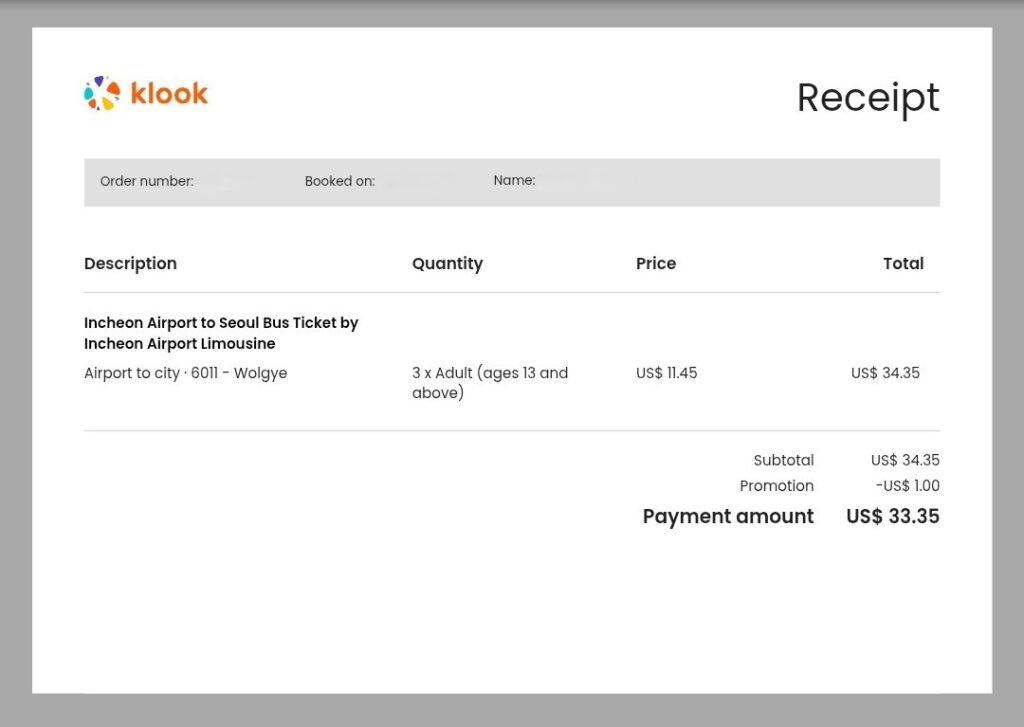
By then, I had already refunded the balance on my T-money card, so I paid for the return bus in cash.
For buses operated by Airport Limousine from Seoul to Incheon Airport, onboard payment options include cash and T-money. Have enough cash or transportation-card balance ready, as regular foreign credit cards aren’t a standard onboard payment option. Tell staff which terminal you need before boarding.
Check the route, boarding location, timetable, and payment instructions for each journey. These can vary by operator, route, and direction. For your return trip, plan from your final accommodation and consider your departure time and luggage.
🚨 23. Know Korea’s Emergency Numbers
Save these numbers before your trip:
Emergency services
- 112 — Police
- 119 — Fire, rescue, and ambulance
Travel assistance
- 1330 — Korea Travel Helpline for tourist information and interpretation assistance
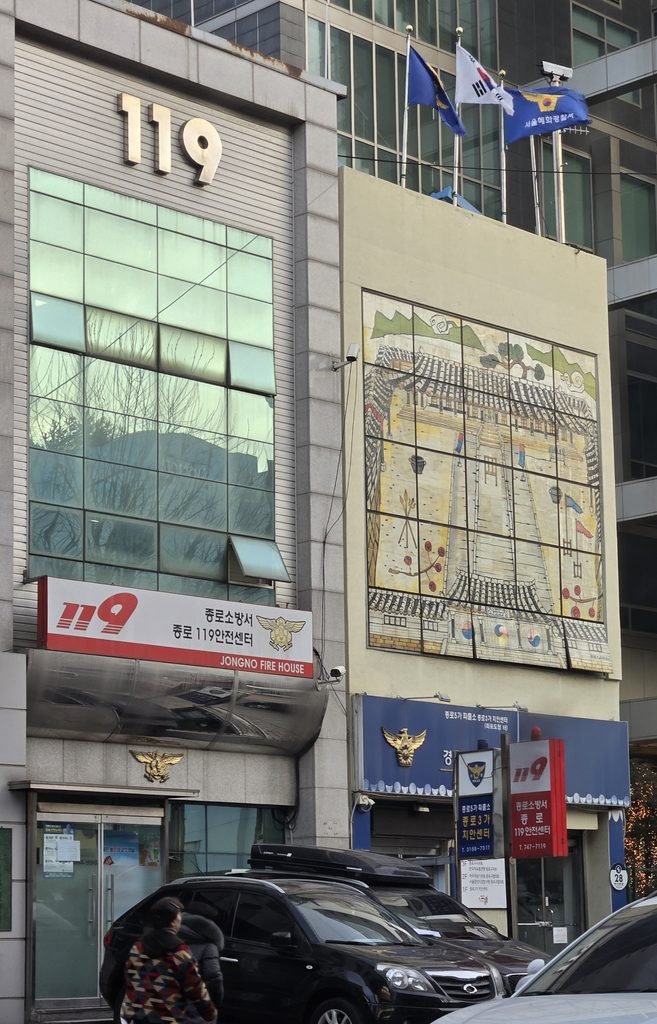
Coming from the United States, I used to pause because I was so accustomed to 911. Saving Korea’s numbers in your phone—or taking a screenshot—means you won’t have to recall them under stress.
📲 24. Save Important Information Offline
Even with a SIM, eSIM, or pocket Wi-Fi, you may briefly lose your connection when you need it.
Before leaving home, save your accommodation’s name and Korean address, flight details, reservations, and emergency numbers somewhere you can access without internet.
Screenshots are useful, but check that downloaded documents actually open while your phone is offline.
Keep your first-day details together so you can quickly find your accommodation address and airport transportation instructions after landing. Screenshots are useful; for downloaded documents, check that they open while your phone is offline.
Before You Go
You don’t need to memorize everything before visiting Korea. Start with the details you’ll need on arrival: how to get online, reach your accommodation, and pay for things.
Check entry requirements close to your trip, keep a little Korean won as backup, and save important information offline. Once those practical details are covered, you can settle in and enjoy being in Korea.
Official Resources
- K-ETA — eligibility, applications, and exemption notices
- Korea e-Arrival Card — official free submission website
- VISITKOREA — tourist tax-refund guide
- Seoul Water — information about Arisu tap water
- 1330 Korea Travel Helpline — tourist information and assistance
- Airport Limousine — routes, timetables, and passenger instructions