
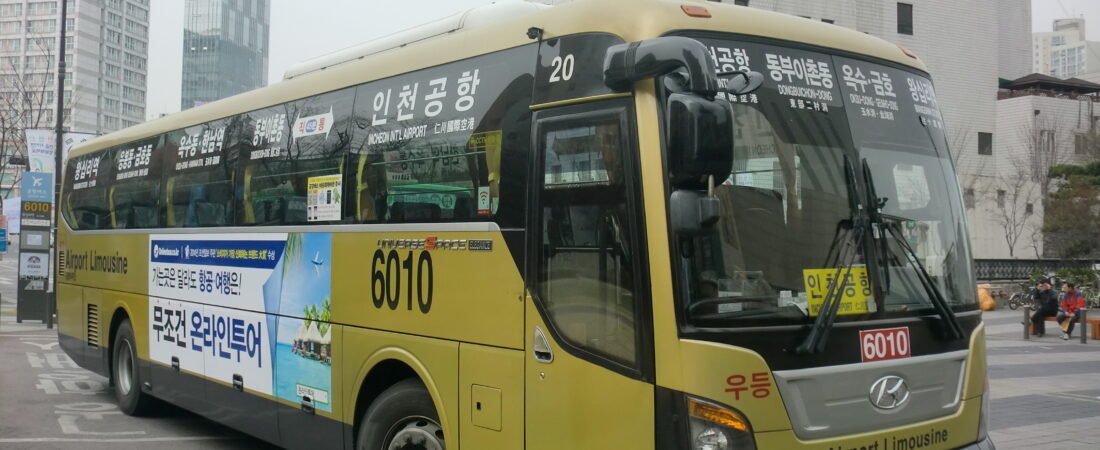
An airport limousine bus can be a comfortable way to travel between Incheon Airport and Seoul, especially when there’s a stop near your accommodation.
The appeal is straightforward: a seat for the journey, luggage storage, and fewer changes after a long flight. The main things to arrange are the correct route, the right stop, and a ticket or payment method accepted by that operator.
This guide walks through choosing your bus, boarding at the airport, getting off in Seoul, and planning the return journey.
For entry documents and the other things to arrange after landing, see my Incheon Airport Arrival Guide.
Last checked: October 30, 2026
In This Guide
🚌 1. Is the Airport Limousine Bus Right for Your Trip?
Start with the distance between the bus stop and your accommodation. A direct bus followed by a short walk can be easier than a train journey involving another transfer with your luggage.
It’s worth considering if you:
- Have a convenient stop near your accommodation
- Prefer a seated journey with luggage stored separately
- Want to avoid managing bags through subway transfers
- Are traveling with family members who would appreciate fewer changes
Comfort Matters After a Long Flight
I particularly appreciate the large, reclining seats after an international flight. I also get carsick easily and have found the airport bus more comfortable than some taxi journeys.
That is my experience rather than a guarantee of a smooth ride. The bus still uses the roads, and comfort varies by vehicle and journey.
The trade-off is time. Traffic affects the journey, and serving both airport terminals can add time depending on your boarding point and route.
If the bus stop is inconvenient or your onward plans are tight, compare the full journey with a train or taxi before buying.
For fares and a comparison of the alternatives, see my Incheon Airport to Seoul guide.
🗺️ 2. Find Your Route From Your Accommodation
Search for your accommodation’s exact Korean address, then identify the nearest suitable airport-bus stop.
Check:
- The operator and route number
- The stop name in Korean and English
- Whether the stop is served in your direction
- The walking route to your accommodation
- The timetable for your arrival terminal
A route serving “Myeongdong” or “Gangnam” may still leave you some distance from your particular hotel.
Airport Limousine Is Also a Company Name
“Airport limousine bus” describes a type of service, but Airport Limousine Co. is also the name of one operator. K Airport Limousine, whose routes include 6703, is a separate company.
Use the website for the operator running your route. A payment rule or luggage allowance from one company may not apply to another.
Routes to Start Your Search
Airport Limousine lists routes including 6001 and 6015 for Myeongdong (명동), and 6002 for Hongdae (홍대), Jongno (종로), Dongdaemun (동대문), and Cheongnyangni (청량리).
K Airport Limousine operates routes to several parts of Seoul. Its 6703 route serves Gangnam (강남) and COEX (코엑스)-area stops, including several hotels. Check the full stop list against your accommodation before choosing.
Useful starting points:
Check the stop-specific timetable, not simply the first departure from the route’s starting point.
🎫 3. Buy a Ticket or Check Your Voucher
Buying before boarding at the airport and booking online before your trip are different things. You may be able to buy your ticket after landing even when a pre-issued ticket is required to board.
Buying at Incheon Airport
After immigration, baggage claim, and customs, follow the signs for airport buses and ticketing.
| Terminal | Where to Start |
|---|---|
| Terminal 1 | Airport-bus ticket counters on the first floor, inside and outside the terminal |
| Terminal 2 | The bus terminal on B1 of the Transportation Center |
Confirm your route, destination stop, departure time, and boarding bay when purchasing.
A Change Returning Visitors Should Know
For Airport Limousine Co. services at Terminal 2, passengers must obtain a paper ticket before boarding. The operator’s notice identifies March 5, 2026 as the start of the changed ticketing arrangements.
Its Terminal 1 arrangements differ by route, so buying or confirming your ticket at the counter is a useful starting point.
If You Bought Through a Booking Platform
Read the instructions attached to your actual purchase. Check whether you have:
- A ticket ready for boarding
- A voucher that needs exchanging
- A booking requiring selection of a departure
- A product restricted to certain routes or directions
I bought my arrival ticket through Klook. That worked for my trip, but another product or operator may have different collection and boarding instructions.
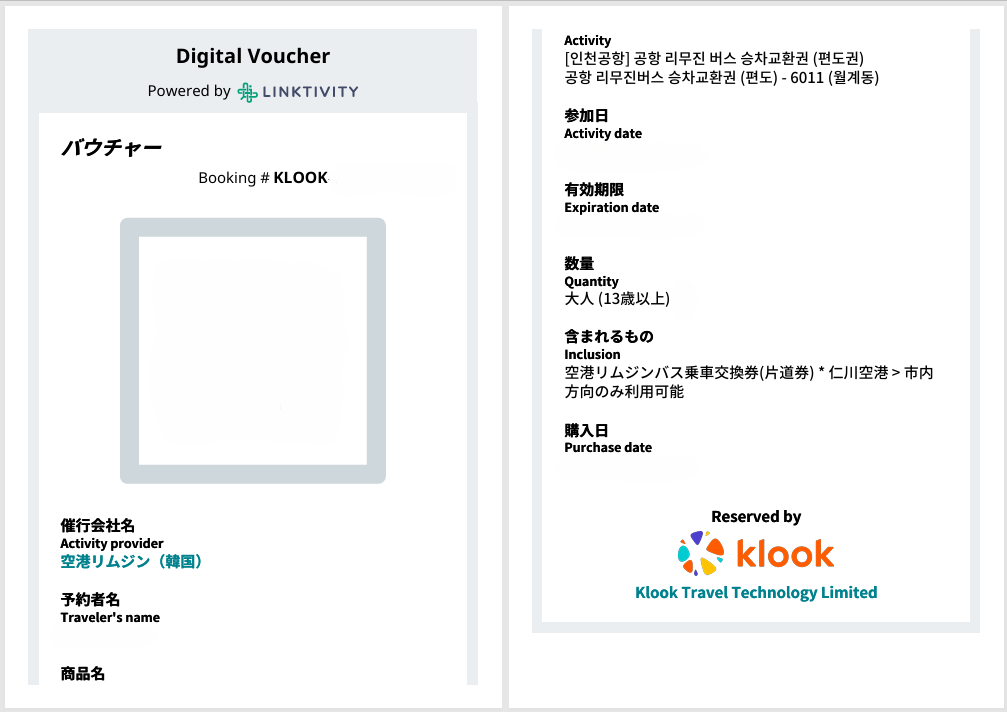
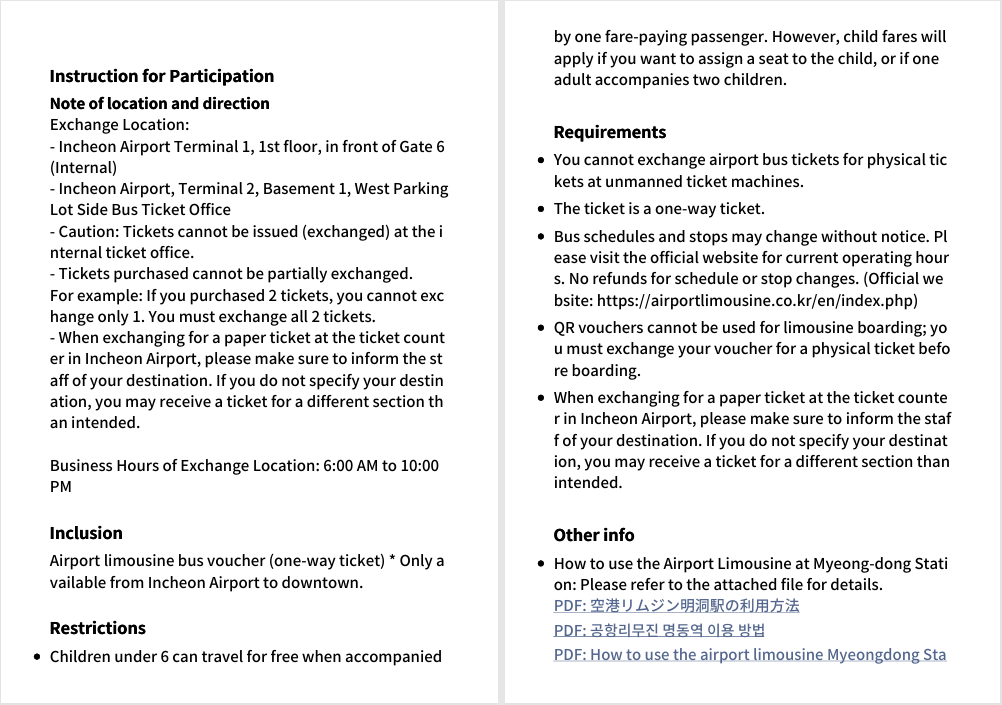
Keep the confirmation available offline, including its redemption location and operating hours.
K Airport Limousine QR Tickets
For K Airport Limousine, exchange your QR ticket for a paper ticket at a staffed ticket counter before boarding at Incheon Airport. Cash and transportation cards aren’t accepted onboard when boarding there.
When boarding in Seoul, you can use the QR ticket directly. Follow the instructions for your particular ticket and direction of travel.
🧳 4. Check Your Luggage Allowance
Airport coaches have luggage arrangements intended for airport travel, but the allowance is not unlimited.
Check the number of items, weight and size limits, and treatment of oversized bags. Include carry-ons and large backpacks when checking the rules.
Operator Examples
Airport Limousine Co. publishes a standard allowance of up to two pieces per passenger, each under 20 kg and within its stated size limits. Larger or heavier luggage is treated differently, and cabin bags count toward the allowance.
K Airport Limousine lists up to two items with a combined weight of 40 kg per paying passenger. Its FAQ also contains size and refusal conditions, so confirm unusually large items directly with the company.
These are operator examples, not a universal allowance for every airport bus.
At the Luggage Compartment
Follow the driver’s or staff member’s loading instructions. Keep any luggage claim slip you receive until you retrieve your bags.
Keep your passport, wallet, phone, medication, and valuables with you. Check your suitcase carefully when collecting it, particularly if several passengers have similar bags.
Assistance with loading and unloading can make the journey easier, but arrangements vary by stop and service.
🚏 5. Find Your Boarding Bay and Confirm the Bus
Use the boarding location shown on your ticket or the operator’s current instructions.
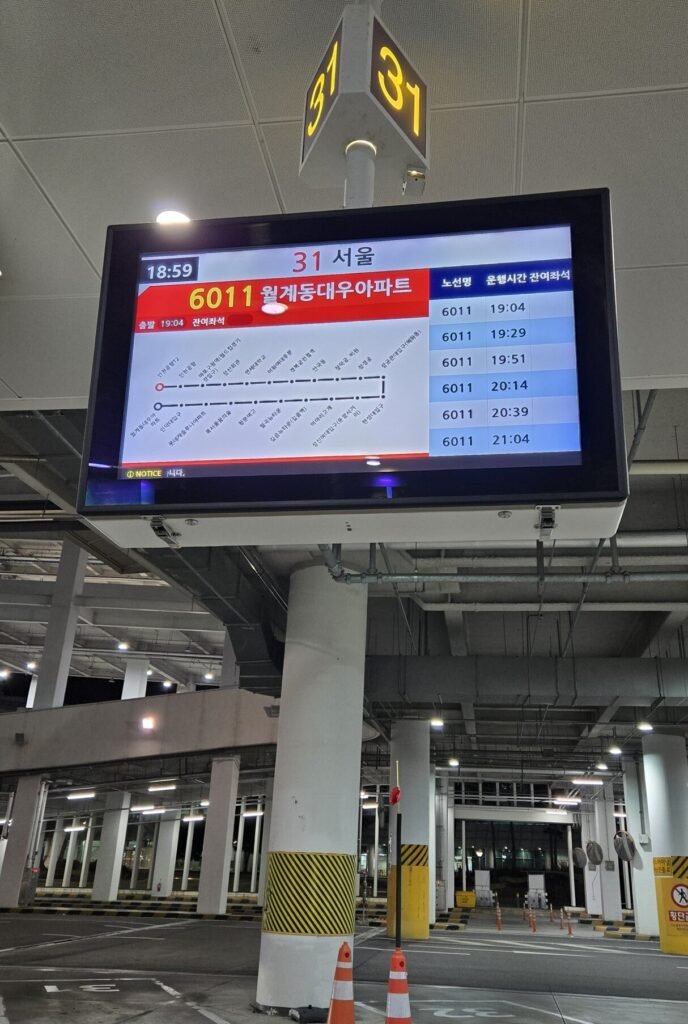
Before handing over luggage or boarding, match:
Operator → Route number → Direction → Departure
Show staff your destination stop if you’re unsure. A hotel name alone may be less useful than the stop name printed on the route.
Follow the seating arrangement for your service. If your ticket assigns a seat, use it; otherwise, follow staff instructions.
If the bus is full or you miss a departure, ask about the next available service and your ticket’s conditions. A voucher’s validity period does not necessarily mean an issued ticket can be used on any departure.
🔔 6. Know When to Get Off
Save your destination stop before boarding and follow your progress during the ride.
For Airport Limousine Co., the operator instructs passengers to press the stop bell before their destination. A driver checking your ticket does not mean they are tracking your individual stop.
If you’re unsure when to signal, show the driver or staff the stop name before departure.
When the bus stops, collect your bags and check the cabin for belongings. Move somewhere safe before opening your walking directions.
⏱️ 7. Use the Timetable, but Allow for Traffic
Published timetables make planning easier, but service intervals vary by route and time of day. Check how long you would wait if you missed a bus.
Distinguish the scheduled departure from the time you expect to reach your accommodation. Traffic, weather, roadworks, and special events can affect the journey.
Airport Limousine and K Airport Limousine provide links to real-time bus information on their websites. Use that alongside the timetable, particularly when waiting at a Seoul stop.
For a late arrival, check the specific night service. Its route and stops may differ from the daytime bus you researched.
✈️ 8. Plan Your Return Trip Separately
Your arrival route does not have to be your departure route.
On one trip, I booked my arrival bus through Klook, then changed hotels during my stay. For the return journey, I used the bus convenient to my new neighborhood and paid separately in cash.
I had already refunded my T-money balance, which made having Korean won useful.
Find the Airport-Bound Stop
Check the return direction carefully. The airport-bound stop may be across the street, around a corner, or part of a different route pattern.
Confirm your airline’s departure terminal and tell the driver T1 or T2 before luggage is loaded.
Payment From Seoul to Incheon Airport
For Airport Limousine Co., the published instructions say to pay the driver with cash or a transportation card such as T-money. Prepare enough Korean won or transit balance rather than relying on a regular foreign credit card onboard.
K Airport Limousine publishes different card-payment guidance. Its FAQ lists onboard card payment, but does not clearly establish acceptance of every foreign-issued card. Confirm your payment method for your actual service.
Airport Limousine Co.’s airport-bound services operate first come, first served, without advance reservations. Allow time for the possibility of a full bus. Its guidance also says the Climate Card is not accepted.
Choose a departure that leaves room for traffic, terminal travel, and your airline’s required check-in time. Be waiting at the stop before the scheduled bus time.
✅ 9. Before You Board
Have these ready:
- Operator, route number, and correct direction
- Destination stop or airport terminal
- Ticket, redeemed voucher, or accepted payment method
- Luggage within the service’s allowance
- Passport, phone, medication, and valuables in your cabin bag
A convenient stop is what makes the airport bus work well. Once the route and ticketing are settled, you can sit back for the journey rather than navigating another transfer immediately after your flight.
Photo: hyolee2, via Wikimedia Commons, CC BY-SA 3.0. Photographed in 2015. Resized.