
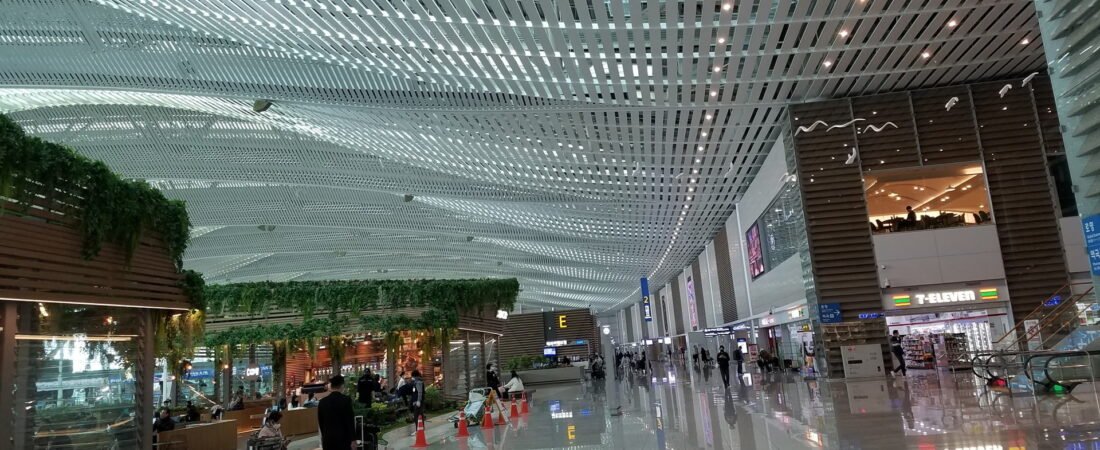
Arriving at Incheon International Airport (ICN) is usually straightforward. The decisions that take a little more thought come afterward: getting your phone connected, sorting out payment, and choosing how to reach your accommodation.
This guide walks you through arrival and the practical things to arrange before leaving the airport, with a comparison of trains, airport buses, taxis, and private transfers to Seoul. Your destination, luggage, and arrival time can help you choose the option that suits your trip.
Last checked: October 29, 2026.
In This Guide
✈️ 1. Before You Fly: Save Your Arrival Details
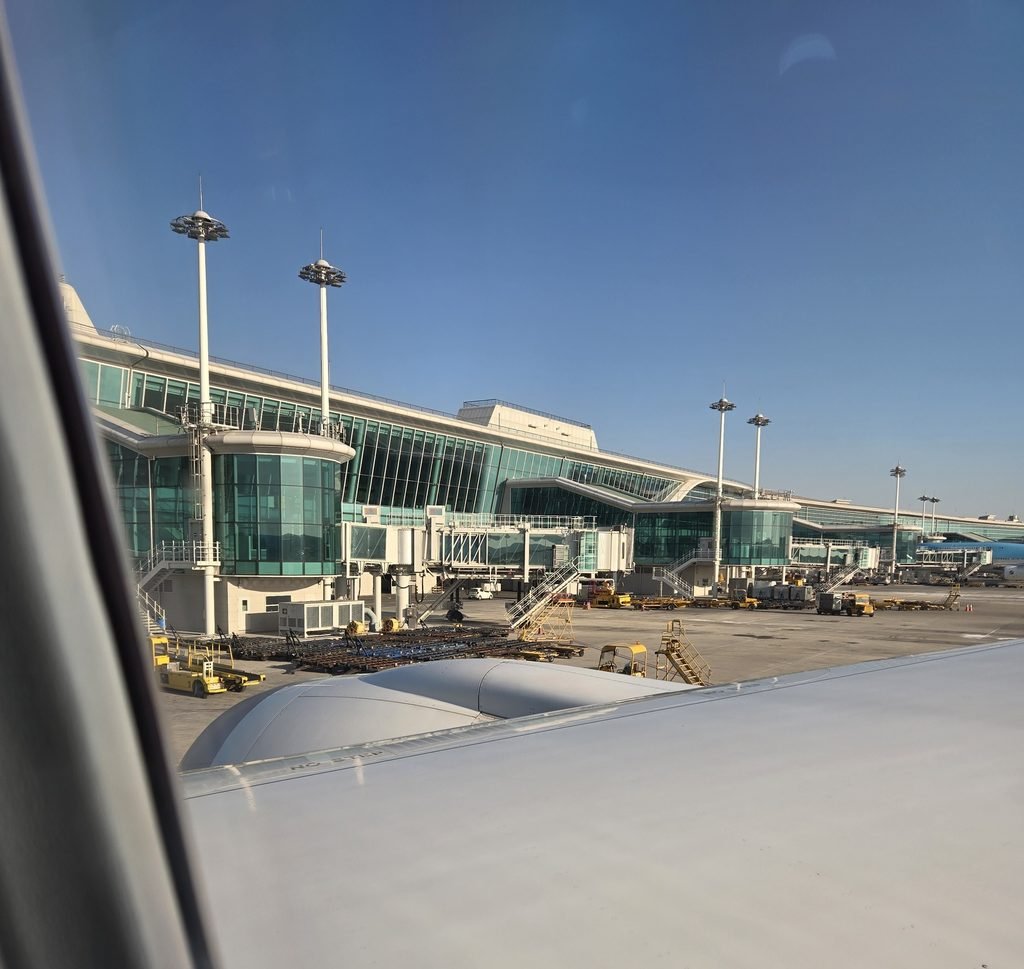
Check your arrival terminal on your airline’s booking or flight information shortly before departure. Incheon Airport has two passenger terminals, so use the correct one when checking transportation stops or arranging a pickup.
Keep these details somewhere you can open without internet:
- Your accommodation’s name and address in Korean
- Your arrival terminal and flight number
- Any SIM, pocket Wi-Fi, or transportation booking confirmations
- Your planned route from the airport to your accommodation
You don’t need to plan every moment after landing. Having your destination and booking details ready gives you a useful starting point, especially after a long flight.
Bringing Prescription Medication to Korea
If you rely on prescription medication, check Korea’s requirements well before departure. Look up the active ingredients, rather than relying only on the brand name.
For medicines that aren’t controlled substances, carry evidence that they are for your personal use, such as your prescription, a medical certificate, or the pharmacy label. Keep medicines in their original packaging and check the permitted quantity for what you’re bringing.
Medicines containing substances controlled in Korea require advance permission from the Ministry of Food and Drug Safety (MFDS), regardless of your nationality. A prescription from home does not replace that permission.
Submit your application and all required documents at least 10 business days before entering Korea. Start earlier to allow time to prepare documents or resolve questions; expedited processing is not available.
Download the English medication permit application manual (PDF). If you’re unsure whether an ingredient is controlled, contact MFDS before packing it.
Keep your prescription, supporting documents, and any required permit accessible during your journey. Airport pharmacies are useful for some needs, but shouldn’t be your plan for replacing essential medication after landing.
🛂 2. Check Your Entry Documents Before Departure
K-ETA and the e-Arrival Card serve different purposes. Which documents you need depends on your nationality and immigration status.
K-ETA
Korea’s temporary K-ETA exemption for designated countries and regions currently runs through December 31, 2026. Check whether your passport qualifies on the official K-ETA website, especially if you’re traveling in 2027.
e-Arrival Card
The e-Arrival Card is an arrival declaration, and submission through the official website is FREE.
Some travelers are exempt, including those entering under a valid K-ETA. Being exempt from applying for K-ETA, however, does not automatically exempt you from submitting an arrival card. Use the official website’s eligibility guide to check your situation.
Complete any required documents before your flight so you have time to resolve questions while you still have a reliable connection.
The submission window includes your arrival date and the two preceding days, based on Korean Standard Time. For example, if you arrive on November 10, you can submit on November 8, 9, or 10 before immigration inspection.
🛬 3. After Landing: Follow the Arrivals Signs
If you’re entering Korea, follow the signs for Arrivals and complete any required health or quarantine checks along the way.
The main sequence is:
Immigration → Baggage claim → Customs → Public arrivals hall
Keep your passport handy for immigration. Afterward, check the screens for your flight’s baggage carousel, collect your luggage, and proceed through customs, declaring any items as required.
Once you enter the public arrivals hall, you can take a moment to get connected, collect any reserved equipment, and confirm your transportation.
Allow some flexibility when booking onward travel. Your scheduled landing time isn’t the same as the time you’ll be ready to leave the airport.
📱 4. Get Connected Before Leaving the Airport
Having internet access makes the next steps easier: checking your route, finding a pickup location, contacting your accommodation, or translating a question.
Choose a Connection That Fits Your Trip
| Option | What to Check |
|---|---|
| eSIM | Your phone must support the plan and be carrier-unlocked. Check installation, activation, data allowance, and tethering conditions. |
| Physical SIM | Check phone compatibility, whether you need to replace your usual SIM, and where to collect it if you’ve reserved one. |
| Pocket Wi-Fi | Useful for sharing a connection, but everyone needs to stay within range. You’ll also need to carry, charge, and return the device. |
Check whether your plan is data-only or includes a Korean phone number, calls, or texts. If you need a number for a particular booking or waiting-list service, confirm that the plan supports that use before buying.
If you’ve already installed an eSIM, follow your provider’s activation instructions. Check which line is selected for mobile data and whether your plan requires data roaming.
If you reserved a physical SIM or pocket Wi-Fi, check your confirmation for the pickup terminal, counter location, and opening hours. For pocket Wi-Fi, keep the return instructions too.
Before moving on, open a map or webpage to check that your connection works. If you’re relying on mobile data, turn Wi-Fi off briefly so you know you’re testing the right connection.
💡 Tip: Keep your accommodation’s Korean address and booking confirmations available offline, even after your connection is working.
Charging Your Devices
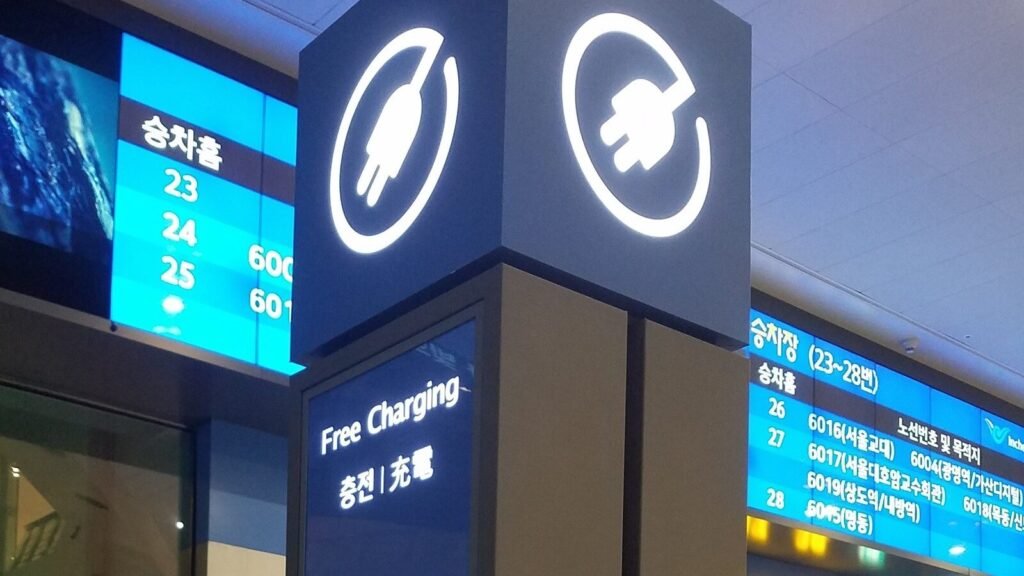
Korea uses 220V electricity at 60Hz, with sockets that have two round holes. Check your charger’s input label before plugging it in.
A charger marked 100–240V, 50/60Hz supports Korea’s electricity supply, although you may still need a compatible plug adapter.
An adapter changes the plug’s shape; it does not convert voltage. Check hair dryers, straighteners, and other heating appliances individually rather than assuming they work like your phone charger.
For more packing advice, see my Korea Travel Tips.
💳 5. Money, Transportation Cards, and Digital Payments
Check how you’ll pay for your chosen transportation before heading to the platform or boarding area. A train ticket, bus ticket, transportation-card balance, and prepaid transfer booking are different arrangements.
If you plan to use a transportation card, check its balance separately from any shopping or payment balance the card may also hold.
Keep a physical payment card and some Korean won accessible rather than packed deep inside your luggage. Having a backup gives you another option if your card is declined or a machine doesn’t accept it.
For everyday payment advice, including choosing KRW at card terminals and keeping cash as a backup, see my Korea Travel Tips.
Do You Need a Transportation Card?
A transportation card can be useful for the local buses and subways you’ll use after arriving. It serves a different purpose from an AREX Express ticket or a prepaid airport-transfer booking.
Choose according to your itinerary. A pay-as-you-go card and a time-limited pass work differently, and a card that suits several days in Seoul may not cover your next destination.
T-money: What’s Changed for Returning Visitors?
If you remember buying a Korea Tour Card, its sales have ended. Tmoney says existing holders can still receive the partner benefits offered with the newer Tmoney Travel Card.
The current visitor options include:
- Tmoney Travel Card: transportation and participating-store payments, plus partner benefits. Tmoney lists it at ₩4,000, sold at convenience stores and Incheon Airport bus ticket offices.
- Tmoney Travel Card+: adds WOWPASS payment functionality alongside Tmoney transportation features. Tmoney lists it at ₩6,000, sold at convenience stores.
Check availability at your intended purchase location. These changes concern the visitor-card products; they do not mean the T-money transportation system has been discontinued.
Check Tmoney’s current visitor-card information.
WOWPASS: Check Both Balances
WOWPASS combines prepaid shopping payments with a Tmoney transportation function, but the balances are separate.
Having money available for shopping does not automatically mean you have enough transportation balance for a ride. Check both in the service’s instructions before traveling.
Climate Card: What Changed in October 2026?
The monthly Climate Card options have ended, but short-term passes remain available for 1, 2, 3, 5, or 7 days.
From October 1, 2026, coverage is limited to eligible subway journeys within Seoul and Seoul-licensed city and village buses. Seoul-licensed buses can still be covered when traveling outside the city.
There is an airport exception: you can finish a covered AREX All-Stop journey at Incheon Airport Terminal 1 or Terminal 2, but you cannot board there using the pass for your arrival journey into Seoul.
The pass does not cover AREX Express, airport limousine buses, the Sinbundang Line, or GTX. Arrange separate payment for those services.
The newer Climate Pass is a separate scheme for eligible Seoul residents, rather than the short-term visitor pass.
Check the current Climate Card coverage and conditions against your actual route, especially if you’re returning with an older card or saved instructions.
Can You Buy Subway Tickets With a Foreign Card?
As of March 17, 2026, designated new ticket machines at Seoul subway stations on Lines 1–8 accept internationally issued cards such as Visa and Mastercard for single-journey tickets, Climate Card purchases, and short-term pass top-ups.
Seoul lists an average international-card service fee of approximately 3.7%. Check the amount displayed before paying.
This is payment at a ticket machine, not direct tap-in at the subway gate. It also doesn’t mean every transportation-card top-up or every machine—including those at ICN—accepts your foreign card.
Digital Payments: Check Your App’s Compatibility
Some visitors can use supported payment apps from home at participating Korean merchants. ZeroPay, for example, supports selected overseas payment services.
Acceptance depends on the app and merchant. Check your app’s Korean payment instructions and the logos displayed at the shop rather than relying only on the presence of a QR code.
Keep a physical payment card and some Korean won as backups. For a physical transportation card, check the available top-up methods before you need your next ride.
💡 Tip: If you’ve prepaid for an airport journey, check whether your confirmation can be used directly or needs to be exchanged for a ticket before boarding.
🏥 6. Useful Facilities at Incheon Airport
Before heading to a facility, check which terminal it’s in and whether it’s in the public or transit area. A service shown on the airport map may be inaccessible after you’ve completed arrival formalities.
Free Airport Wi-Fi
Incheon Airport provides free Wi-Fi. Its official connection instructions identify the network as AIRPORTWIFI. Check airport signage if you’re unsure which network to select.
Use the connection to retrieve a booking, contact your accommodation, or finish setting up mobile data. Save your essential details before leaving the terminal.
Pharmacies and Medical Assistance
The airport directory lists pharmacies and medical centers across the two terminals. Check the current location, operating hours, and public-area access for the service you need.
If you need medical assistance, ask airport staff for help locating the appropriate service. A pharmacy visit and a medical consultation serve different purposes, and your usual prescription medicine may not be available over the counter.
Search Incheon Airport’s facilities directory.
Collecting Rental Equipment
If you’ve arranged equipment rental with airport pickup, read the provider’s meeting instructions carefully. Pickup may be at a meeting point rather than a permanent rental counter.
Check the terminal, floor, collection time, deposit requirements, and return arrangements. Camera and other travel-equipment services can have advance-booking requirements, so confirm availability before relying on collection after landing.
Can You Shower After Landing?
The airport lists shower facilities in the transit areas. These aren’t facilities you can simply walk back into after clearing immigration and customs.
If a shower is important to your arrival plans, check for an option accessible from the public area, such as a suitable hotel or spa, and confirm its current facilities and admission conditions before booking.
🚆 7. Choose Your Transportation to Seoul
Start with your accommodation’s exact location. Compare the whole journey—including transfers and the walk from your final stop—rather than just the time it takes to reach Seoul.
| Option | What to Consider |
|---|---|
| AREX Express | A nonstop train to Seoul Station. Check how you’ll continue from there to your accommodation. |
| AREX All-Stop | Serves intermediate stations, which may suit your destination better than Seoul Station. |
| Airport limousine bus | Can reduce transfers if your accommodation is near a stop, but journey time depends on traffic. |
| Taxi | Offers a direct journey to your destination. Consider passenger numbers and luggage when choosing a vehicle. |
| Private transfer | Provides a pre-arranged pickup. Check luggage capacity, waiting time, and flight-delay conditions before booking. |
Your arrival time matters too. Check the timetable for your terminal and allow time for immigration, baggage claim, and anything you need to collect before leaving.
Taking AREX
When booking the Express train, select the correct departure station: Incheon Airport Terminal 1 or Terminal 2. Check the departure time and leave enough time to reach the platform after completing your arrival tasks.
Follow signs for Airport Railroad / AREX, then check whether you’re entering the Express or All-Stop service.
Finding Your Airport Bus
Check the route number, destination stop, departure time, and boarding location before buying a ticket.
At Terminal 1, bus ticket counters are on the first floor, inside and outside the terminal. At Terminal 2, bus information and ticket purchases are available at the B1 Transportation Center bus terminal. Confirm your exact boarding bay when collecting your ticket.
If you booked through another website, follow its instructions for exchanging or using your voucher.
Finding Your Taxi or Reserved Pickup
For a regular taxi, follow airport signs to the designated taxi stand. Incheon Airport advises using these stands rather than accepting unsolicited ride offers.
For an app booking or private transfer, follow your provider’s meeting instructions—the pickup point may differ from the regular taxi queue. Keep the confirmation and contact details handy.
Booking an Airport Pickup Through an App
If you prefer to arrange a ride through an app, k.ride lists airport pickup reservations for both Incheon terminals.
Check the vehicle’s passenger and luggage capacity, payment arrangements, meeting point, and waiting-time conditions. For a reservation, enter your flight details carefully and read what happens if your flight is delayed.
Save the booking confirmation and contact instructions somewhere easy to find. Your reserved pickup may use a different meeting point from the regular taxi stand.
Check the Last Part of the Journey
A convenient airport connection can still leave you with stairs, a long walk, or another transfer. Open your accommodation’s Korean address in Naver Map or KakaoMap and check the route from your final station or bus stop.
If you have heavy luggage, consider how comfortably you can manage that last stretch after a long flight.
For a comparison of trains, airport limousine buses, taxis, and private transfers, see my Incheon Airport to Seoul guide.
🧳 8. Plan Around Your Luggage
Before choosing transportation, think about how comfortably you can manage your bags through transfers, station corridors, and the walk to your accommodation.
A route with fewer changes may be worth a little extra travel time, especially after a long flight. If you’re traveling together, compare the total cost for your group as well as the convenience.
Considering Luggage Delivery?
If you’re booking airport-to-accommodation luggage delivery, check that your property is covered and can receive your bags. Confirm the drop-off deadline, expected delivery time, and size or weight limits before paying.
Keep your passport, medication, valuables, and anything you’ll need before delivery with you.
Arriving Before Check-In?
Ask your accommodation whether it can hold your luggage before your room is ready. Confirm the arrangements directly, particularly if the property has limited reception hours.
🗺️ 9. Have Your Navigation and Translation Ready
Before leaving the airport, open your map app and find your accommodation using its Korean name or address. Check the entrance and the walk from your final station or bus stop.
Keep a small set of useful tools ready:
- Navigation: your chosen map app, with your accommodation saved
- Translation: an app such as Papago, ready for short questions or signs
- Transportation: any app you need for a booked ride or onward ticket
- Airport information: the official Incheon Airport website for maps and service locations
If an English search doesn’t find the right property, copy its Korean address from your booking confirmation. Check that the result matches the correct branch before saving it.
Set up any required accounts while you have a working connection. Keep the address and essential instructions offline too.
🌙 10. Arriving Late? Check Your Options Before You Fly
If your flight arrives late in the evening, check the last train or bus from your terminal, allowing time to clear immigration, collect luggage, and reach the boarding area.
Have a backup plan if a flight delay means you miss your intended service. If you book a pickup, read the provider’s flight-delay and waiting-time conditions.
Confirm Your Accommodation’s Check-In Arrangements
Tell your accommodation if you expect to arrive late. Save any after-hours entry instructions offline, including how to contact someone if you can’t get inside.
A little preparation here can make the final part of a long travel day much easier.
Visiting During a Layover?
If you’re connecting to another international flight, check your airline’s transfer instructions before following the route for passengers entering Korea.
Incheon Airport offers transit tours for eligible passengers, but a long connection alone does not establish eligibility to enter Korea or join a tour. Check your entry requirements, tour conditions, and available time before making plans.
Check the official Incheon Airport transit-tour guide.
✅ 11. Before You Leave the Airport
Take a moment to check that you have:
- A working connection, or your route and booking details saved offline
- Your accommodation’s Korean address
- A way to pay for your chosen transportation
- The correct boarding or pickup location
- Your passport, phone, luggage, and anything collected at the airport
If you’ve arranged a pickup, follow the provider’s meeting instructions. For a train or bus, check that you’re heading to the right service and destination before boarding.
You don’t need to have the rest of your trip figured out. Once you know where you’re going and how you’ll get there, you can focus on settling into Korea.
Official Resources
- Incheon Airport — arrivals, terminal maps, and airport services
- K-ETA — eligibility, applications, and exemption notices
- Korea e-Arrival Card — official free submission website
- MFDS — permit application and instructions for bringing controlled medication into Korea
- Tmoney — current visitor cards and Korea Tour Card notice
- WOWPASS — payment and transportation instructions
- Seoul Metropolitan Government — Climate Card coverage and conditions
- AREX Airport Railroad
- Incheon Airport — bus routes and ticket information
- Incheon Airport — transit-tour eligibility and instructions