
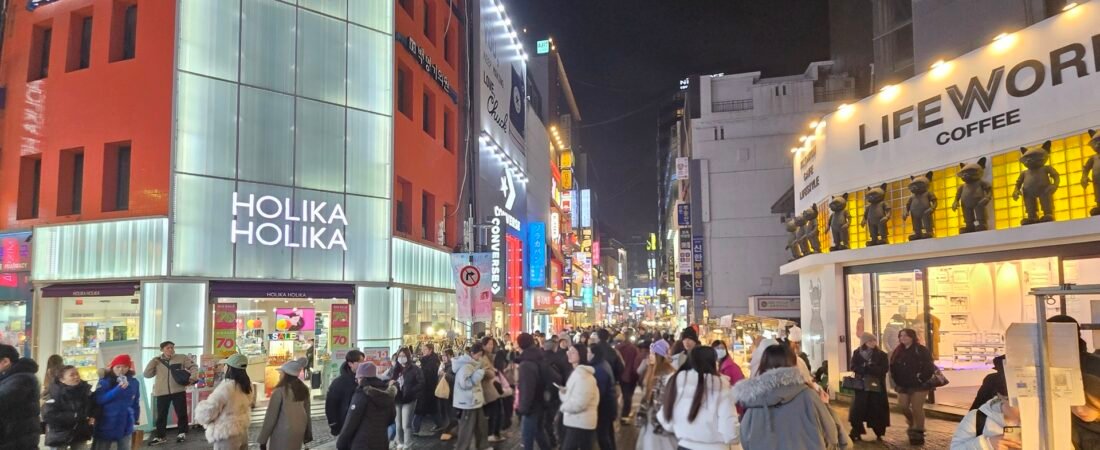
Traveling somewhere unfamiliar means learning how everyday purchases work, from ordering at a market stall to understanding a taxi fare. In Korea, knowing whether a price is per person, per serving, or by weight can help you avoid an unexpected bill.
Some surprises come from misunderstandings. Others deserve a closer look, especially when the amount charged differs from the displayed or agreed price.
This guide explains what to check when paying for food, transportation, shopping, and accommodation, along with useful Korean phrases and where to get help if a charge seems wrong.
In This Guide
💰 1. Expensive Doesn’t Always Mean Overcharging
In Korean, 바가지요금 (bagaji yogeum) describes an unfairly inflated charge. You may also hear 바가지를 쓰다 (bagaji reul sseuda), meaning to get overcharged or ripped off.
But an expensive purchase isn’t automatically an unfair one. A waterfront restaurant may charge more than a neighborhood restaurant, and a hotel room during a major festival may cost more than it does on an ordinary weekday. You can decide whether the experience is worth the asking price.
A closer look is warranted when the amount charged differs from the displayed price, an unexplained item appears on your bill, or the price changes after you’ve agreed to the purchase.
The useful distinction is whether you understood the price and what it covered—and whether the business honored that agreement.
🍢 2. Markets and Street Food: Confirm Price and Quantity
A traditional market can be a rewarding place to eat and shop, but the setting alone doesn’t tell you whether something is good value. Look at what’s being sold, how much you’ll receive, and the price before ordering.
A displayed amount might apply to one piece, a serving, a set, or a particular weight. If you’re buying several items, confirm how the price applies to your order.
For example, a sign showing ₩5,000 could mean ₩5,000 for one item or for a portion containing several pieces. Pointing to what you want and confirming the quantity can prevent confusion.
When the Price Isn’t Clear
Ask 얼마예요? (eol-ma-yeyo?) — “How much is it?” before agreeing to buy. If you’re choosing several things, ask 다 얼마예요? (da eol-ma-yeyo?) — ‘How much is everything?’
💡 Pronunciation tip: In these Korean phrases, “eo” represents one vowel, roughly like “uh”—not “ee-oh.”
You can use your phone’s calculator or a translation app to confirm the amount. Make sure you and the seller are discussing the same quantity.
Even when a stall is busy, take the time you need to understand your order. If the price remains unclear or you feel pressured to decide, it’s fine to browse elsewhere.
🍽️ 3. Restaurants: Understand What’s Included
Before ordering, check whether a menu price applies to one person, one serving, or the whole dish. For a shared meal, ask how many people it serves and whether there’s a minimum order.
Look for separately priced additions, such as rice, noodles, drinks, or extra meat. These can change the final bill even when the main dish’s price is clear.
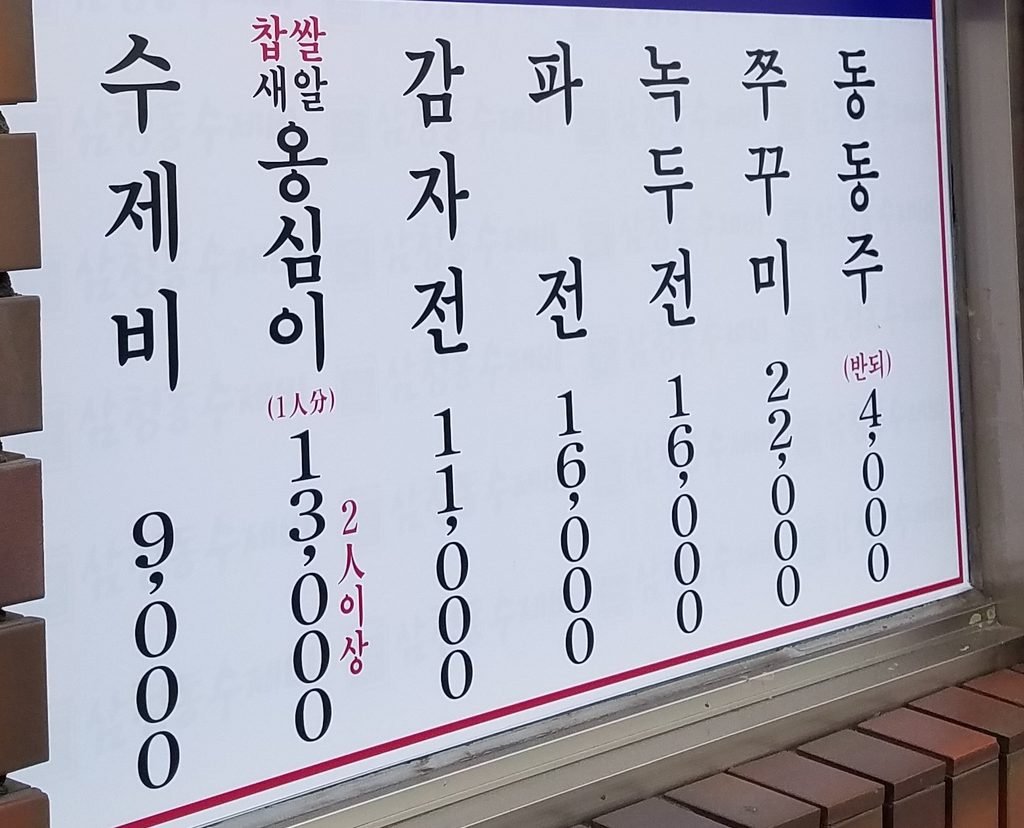
Banchan and Extra Orders
Basic 반찬 (banchan), or side dishes, are usually included with a Korean meal, and many restaurants offer refills. The selection and refill policy vary, however, and a separately listed dish may cost extra.
If a server brings something you don’t recognize, it may be part of the meal. Ask what it is and whether it’s included before treating it as an unexpected charge.
Seafood: Check the Full Cost
At some seafood markets, buying the seafood and having it prepared are separate transactions. You might pay a vendor for the seafood, then pay a restaurant for preparation and table service.
Before choosing your seafood, confirm the price, weight, and any preparation or dining charges. Ask what those charges cover and whether additional dishes cost extra.
Understanding the full arrangement before agreeing makes it easier to decide whether the meal fits your budget.
🚕 4. Taxis: Understand How Your Fare Is Calculated
Before getting into a taxi, know which service you’re taking and how the fare will be calculated. A regular metered taxi, a premium app-booked ride, and a prearranged airport transfer may have different pricing.
Booking through an app can make this easier to follow. You can enter your destination before pickup, check the selected service, and keep a record of the trip. Read whether the amount shown is an estimate or a fixed fare.
Metered Rides and Fixed Fares
For an ordinary metered ride, expect the driver to use the meter. In Seoul, approved fare arrangements also exist that do not require a metered charge, so a fixed price alone does not establish that something is wrong.
An unexplained flat-price offer from someone approaching you outside a station, market, or attraction deserves closer attention. Before accepting, confirm the service, total fare, and what it includes. If the arrangement remains unclear, choose another ride.
Check Extras and Keep Your Receipt
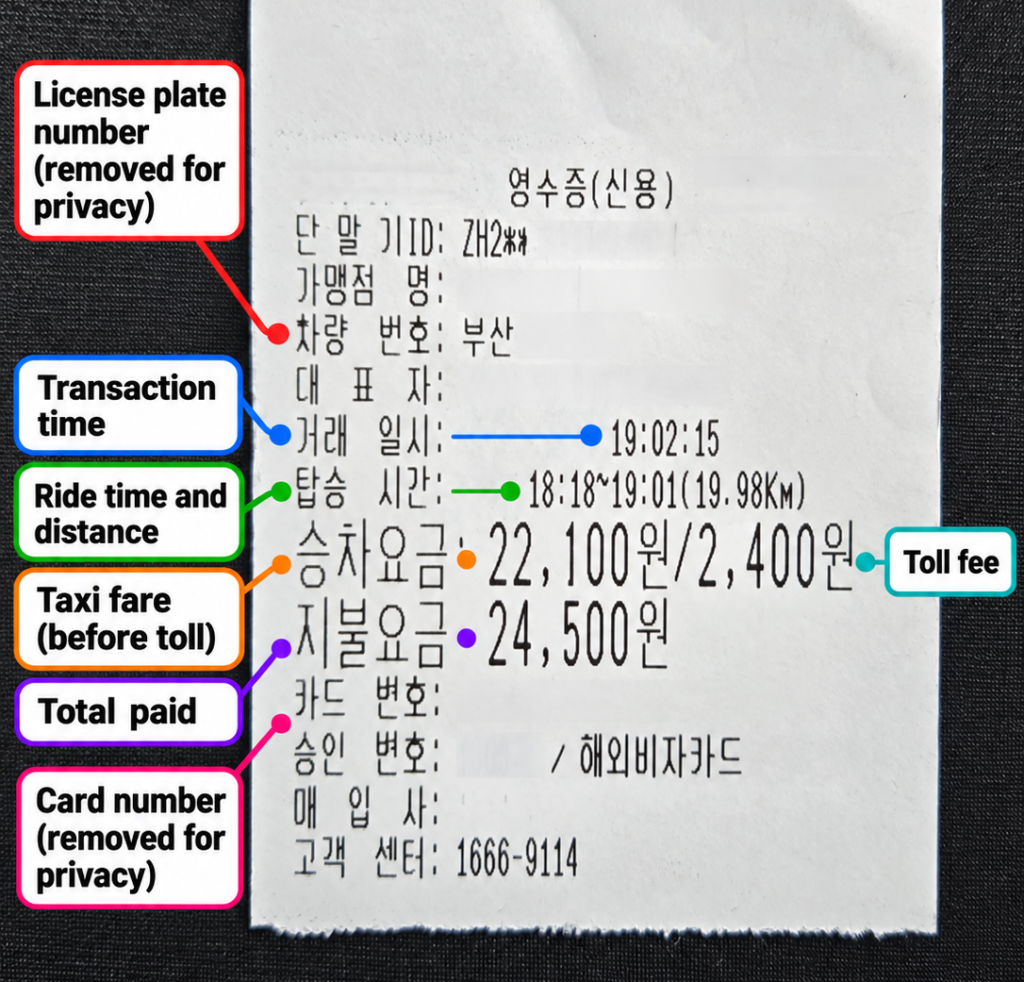
Tolls and applicable surcharges can affect the total. A difference between an app’s initial estimate and the final charge is a reason to check the breakdown, rather than proof of overcharging.
For a fixed-price service, check whether tolls and other charges are included before booking.
Keep the taxi receipt and, if you booked through an app, the trip record. These give you something concrete to refer to if you need an explanation or help with a disputed charge.
🛍️ 5. Shopping: Compare the Final Price
A discount is only useful if the final purchase makes sense for you. Before buying cosmetics, souvenirs, clothing, or other items, check the product size, quantity, and total price.
For a multipack or promotional set, look at what’s actually included. Two offers may appear similar while containing different sizes or numbers of items. If you’re comparing stores, compare the same product and quantity.
Give Yourself Time to Decide
“Special price,” “tourist discount,” and “last chance” are reasons to look at the offer, not reasons to buy immediately.
If a salesperson suggests extra products or a larger set, check the new total before agreeing. It’s fine to decline samples, recommendations, or an offer that doesn’t suit you.
You can say 괜찮아요 (gwen-chan-ah-yo) — “No, thank you.”
For a larger purchase, check the return conditions before paying and keep your receipt. If a tax refund is offered, clarify how much you’ll be charged now and whether you need to claim the refund separately.
🏨 6. Hotels: Check the Total and Save Your Booking
When comparing accommodations, look at the total for your entire stay rather than only the nightly rate. Check that each offer covers the same dates, room type, number of guests, and cancellation conditions.
Breakfast, additional guests, and other extras can affect the amount you pay. Before confirming, review any charges payable at the property as well as the amount collected during booking.
Save the confirmation showing your room, dates, guest count, agreed price, and cancellation policy. Keep the property’s contact details somewhere easy to find.
Ask About Hotel Tax Refunds
Some designated hotels offer accommodation VAT refunds to eligible international visitors. Before booking, ask whether the property participates for your travel dates and whether your chosen booking and payment method qualifies.
Participation can change between quarters, so confirm eligibility for your actual stay dates directly with the hotel.
Payment arrangements matter: a reservation made through a booking website may qualify when you pay the hotel directly, while prepaying an intermediary may not. Confirm the requirements with the hotel rather than relying only on a “tax refund” label.
If your stay qualifies, ask what documents you’ll need and how to claim the refund.
During Festivals, Concerts, and Holidays
A room may cost considerably more during a popular event or holiday. Compare several options before booking and decide whether staying nearby is worth the price for your trip.
A higher advertised rate is different from a property later asking you to cancel a confirmed booking and reserve again at a higher price.
If you receive an unexpected price-change or cancellation request, keep the messages and contact the booking platform or property through its official channel. Ask for an explanation and review your reservation terms before agreeing to a change.
💳 7. Card Payments: Check the Currency
When a payment terminal offers a choice between Korean won (KRW) and your home currency, choosing your home currency can activate Dynamic Currency Conversion (DCC). The merchant or payment processor converts the purchase at its offered rate, which may include a markup.
I generally choose KRW. This avoids accepting the merchant’s conversion offer, although your card’s exchange-rate terms and any foreign transaction fees still matter.
If an employee operates the terminal, say “Korean won, please” before they finish processing the payment. Check the currency on your receipt afterward.
A disclosed conversion markup is different from being charged more than the agreed price for an item. It is still a cost worth understanding before approving the transaction.
My Korea travel tips guide includes receipt examples showing a purchase converted to USD with a disclosed 3% conversion fee and another where I declined USD and paid in KRW. That percentage applies to those examples; it isn’t a universal DCC rate.
🧾 8. What to Do About an Unexpected Charge
If a bill looks wrong, start by asking for an explanation. A difference may come from an extra order, a per-person price, or a charge you hadn’t understood. Comparing the bill with the menu, booking confirmation, or fare breakdown can help you identify what happened.
Ask About the Difference
Point to the amount or item you’re questioning. You can ask 이거 뭐예요? (igeo mo-yeyo?) — “What is this?” and show the price you expected.
If speaking is difficult, use a translation app to explain the specific difference: “The menu says ₩10,000, but the bill shows ₩15,000.”
Keep the conversation focused on the charge. If the business explains it or corrects a mistake, you can decide whether anything further is needed.
Keep a Clear Record
Save the receipt, payment record, and any relevant booking confirmation or messages. A photo of the displayed price can also help.
Note the business name, location, date, and time. For a taxi, keep the license plate number and app trip record if available.
You don’t need to remain in an uncomfortable situation to gather every detail. Keep what you safely can and seek help afterward.
Where to Get Help
The 1330 Korea Travel Helpline provides travel information and interpretation assistance. KTO also operates a Tourist Complaint Center for reporting problems involving tourism businesses, facilities, and transportation.
Call 1330 within Korea or +82-2-1330 from overseas, or use the official online complaint service.
For taxi problems in Seoul, the city also provides a multilingual Taxi QR Complaint System. You can access it through the city’s official reporting information.
A complaint provides a way to have the issue reviewed; it does not guarantee a refund.
KTO Tourist Complaint Center
Seoul taxi complaint information
🗣️ 9. Useful Korean Phrases for Price Checks
A few short phrases can help you clarify a purchase. Point to the item or amount as you speak, and use your phone to confirm numbers when needed.
| Korean and pronunciation | Meaning |
|---|---|
| 얼마예요? (eol-ma-yeyo?) | How much is it? |
| 다 얼마예요? (da eol-ma-yeyo?) | How much is everything? |
| 하나 얼마예요? (hana eol-ma-yeyo?) | How much for one? |
| 이거 뭐예요? (igeo mo-yeyo?) | What is this? |
| 영수증 주세요. (yeong-su-jeung ju-se-yo.) | Receipt, please. |
| 괜찮아요. (gwen-chan-ah-yo.) | No, thank you. — when declining an offer |
These phrases are polite enough for everyday interactions with shopkeepers, restaurant staff, and drivers. You can also show the Korean text directly if you’d rather not say it aloud.
✅ 10. Before You Pay
Before agreeing to an unfamiliar purchase, take a moment to check:
- What you’re getting: the item, quantity, portion, room, or service.
- The full price: including any extras and what the quoted amount covers.
- The payment currency: especially when a terminal offers your home currency.
- The record you’ll keep: a receipt, booking confirmation, or app trip history.
If something is unclear, ask before proceeding. You can compare another offer or walk away without having to justify your decision.
Knowing how common transactions work leaves you better prepared to recognize a mistake or question an unexplained charge. Once the details are clear, you can get on with enjoying your meal, shopping, or the rest of your trip.
Featured photo by GajagoKorea. AI-assisted editing used only to remove the author for privacy.
Official Resources
- Seoul Metropolitan Government — taxi fares and approved fare arrangements
- Korea Tourism Organization — 1330 Travel Helpline and Complaint Center
- Korea Tourism Organization — submit a tourist complaint
- Seoul Metropolitan Government — taxi complaint reporting
- Ministry of Culture, Sports and Tourism — participating hotels for accommodation VAT refunds, October–December 2026 (Korean; Excel list attached)
* To view the hotel list without downloading it, select 미리보기 (Preview) beside the lower attachment marked XLS.